

Before Maisy was born, I never thought about walking and Down syndrome as something that could look different.
With my older children, it just happened naturally over time. They pulled themselves up, took a few wobbly steps, and before long, they were running around the house.
But I’ve learned that with Down syndrome, mobility can be a much bigger journey
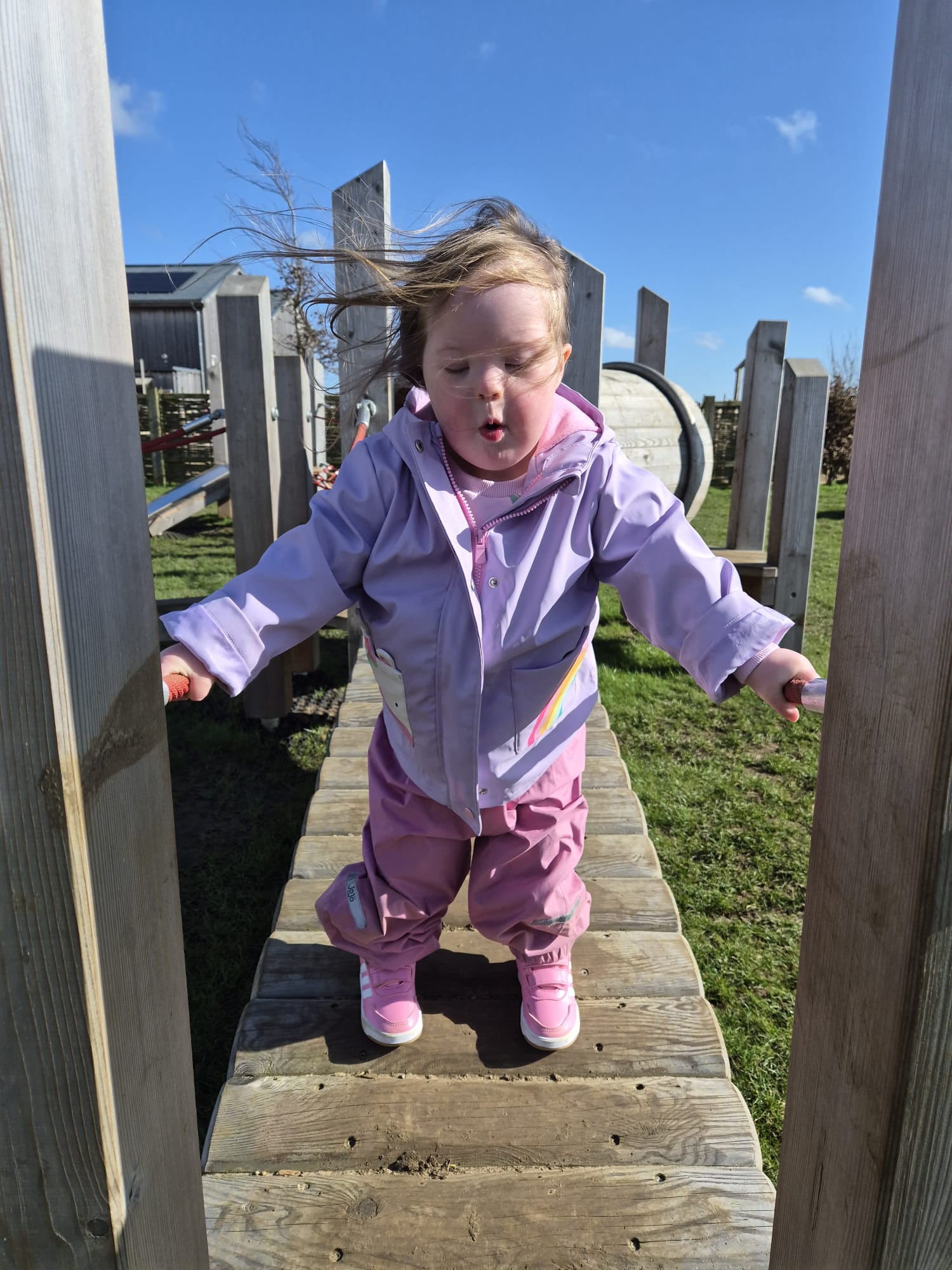
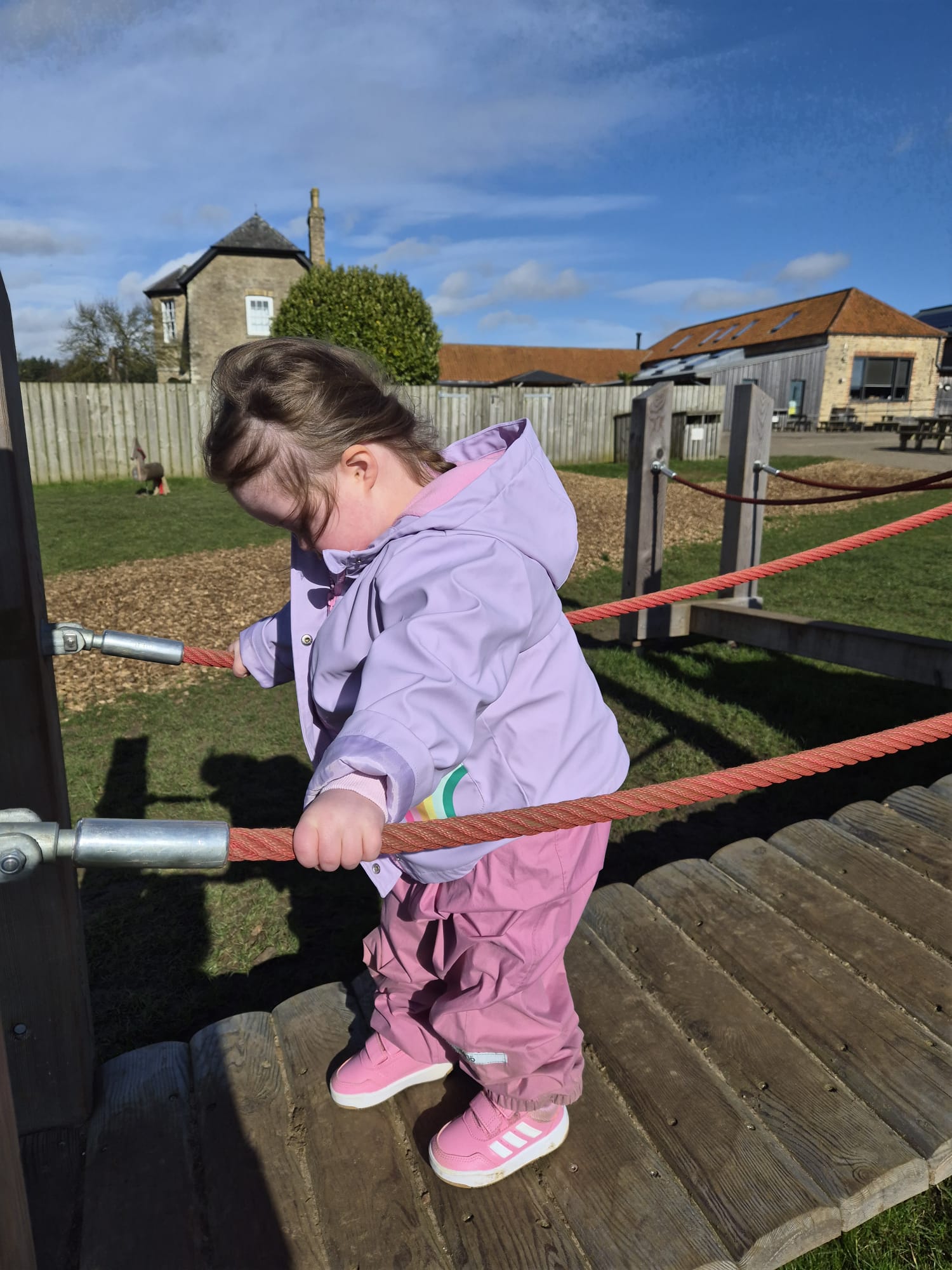
Some children with Down syndrome walk independently. Some use walkers or gait trainers first. Some need extra support for balance and coordination.
And some children who can walk still benefit from using a wheelchair for longer distances, school days, or bigger outings.
That’s been part of Maisy’s journey, too.
She started out using a walker while building strength and confidence, now walks independently in many situations, and also uses a wheelchair for longer distances to help support her independence and energy levels.
In this post, I want to share what we’ve learned about mobility, walking, and Down syndrome, how things can develop differently for every child, and why mobility support is never a step backwards.
When Do Children With Down Syndrome Start Walking?
One of the most common questions parents ask is when children with Down syndrome start walking.
The truth is, it varies a lot.
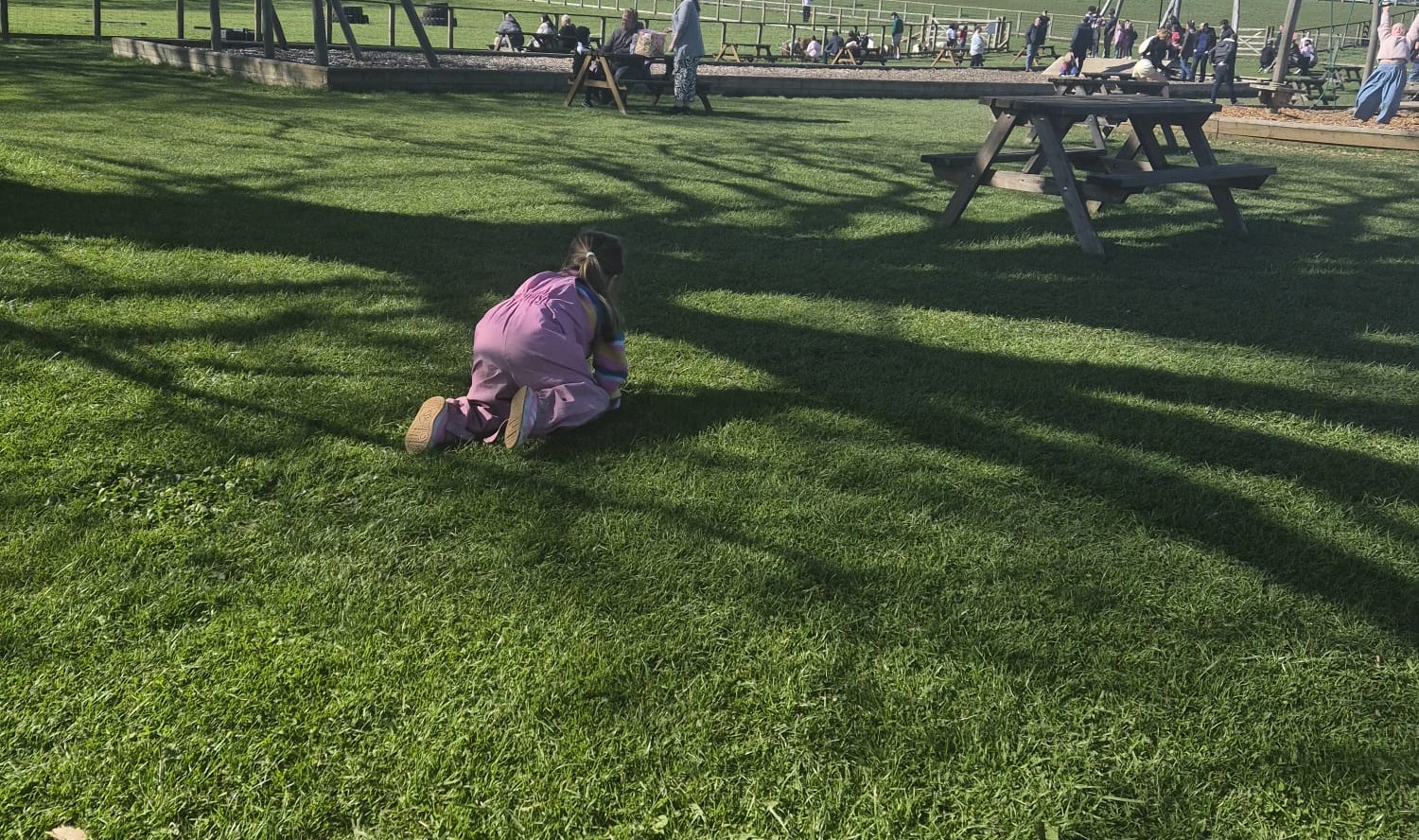
Many children with Down syndrome learn to walk later than typically developing children, often because of factors like low muscle tone, joint laxity, balance difficulties, and delayed motor development.
While some children may walk earlier, others can take several years to develop independent walking.
And honestly, this was one of the harder parts for me in the beginning.
When you’re constantly hearing about milestones, it’s easy to start focusing on timelines and comparisons, even when you know every child develops differently.
But over time, I’ve realised that development with Down syndrome happens slowly, and in ways you don’t always notice straight away.
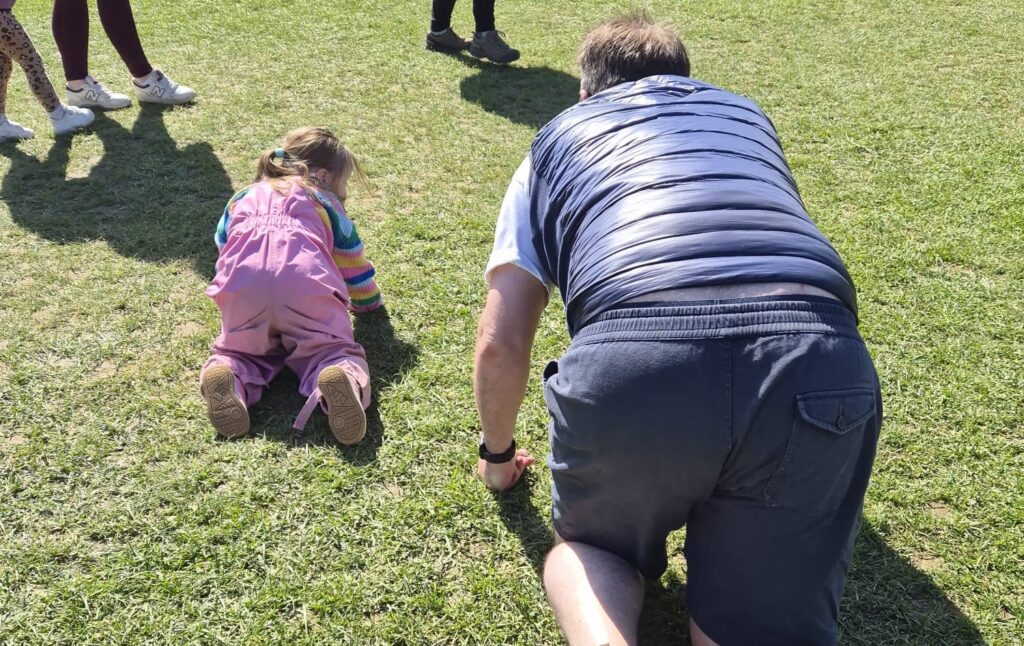
Before independent walking happens, many children spend a long time building the foundations needed for mobility.
Your child’s core strength, balance, coordination, muscle control, endurance, and confidence all play a big role in walking development.
And with Down syndrome, those foundational skills can simply take more time to develop.
Why Walking Can Be More Challenging With Down Syndrome
There are a few reasons why walking can look different for many children with Down syndrome.
One of the biggest factors is hypotonia, also known as low muscle tone.
Children with Down syndrome usually have lower muscle tone throughout their bodies, which can affect strength, stability, posture, and movement.
Walking requires a surprising amount of coordination and muscle control.
Your child needs strength through their core, hips, legs, and ankles while also balancing and coordinating movement at the same time.
Joint laxity can also play a role.
Many children with Down syndrome have looser joints, which can make movements less stable and more tiring physically.
That extra effort can impact endurance, too.
Something I didn’t fully understand early on was how exhausting walking can actually be for some children with Down syndrome.
Even after independent walking develops, longer distances or busy days can still require a huge amount of energy.
I think this is something people outside of the Down syndrome community don’t always see or understand. Sometimes they assume that once a child walks independently, mobility difficulties are completely gone.
For Maisy, mobility still looks different even though those first steps happened.
Maisy’s Journey With Walking and Mobility
With Maisy, walking has never just been about reaching one milestone.
It’s been a gradual process of building strength, balance, coordination, and confidence over time.
She started out using a walker while learning how to move more independently.
There were many moments when I wondered what mobility would eventually look like for her.
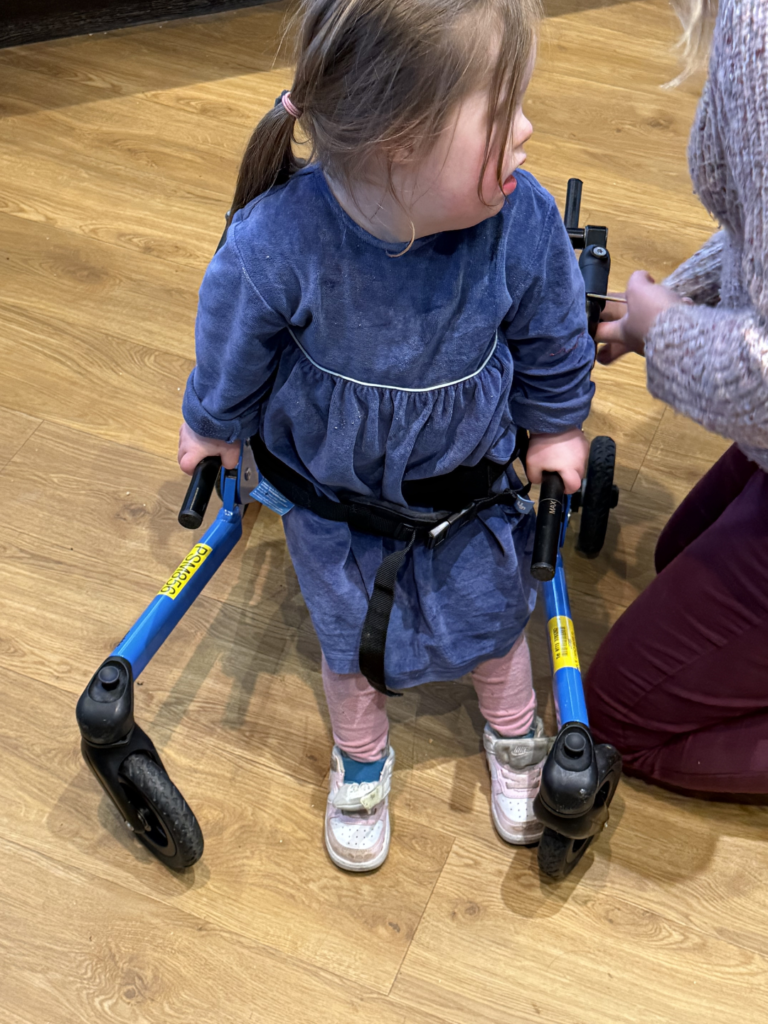
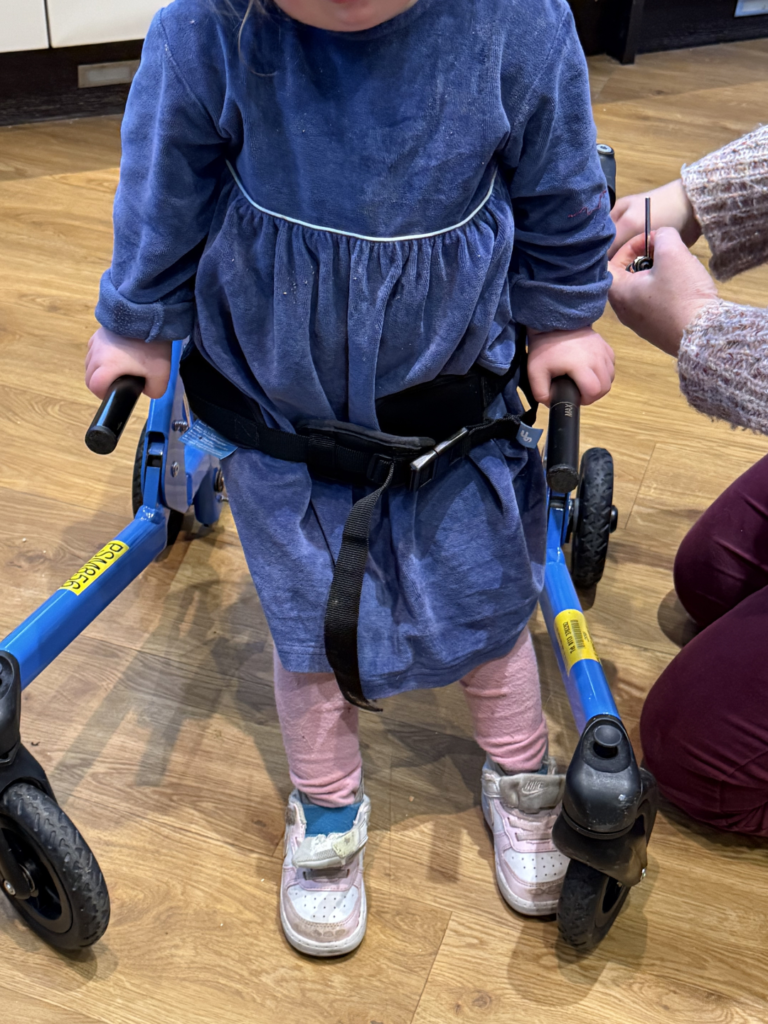
I never doubted Maisy for a second, but development with Down syndrome can feel unpredictable sometimes, and I often felt unsure
Maisy’s progress happened in stages that seemed years apart. But she did become stronger and more confident on her feet.
Now she walks independently in many situations, which is something we’re incredibly proud of.
Longer distances, however, can still be exhausting for her.
Busy days out, school activities, holidays, and places with lots of walking can take a huge amount of energy and physical effort.
And that’s where her wheelchair has become an important support for her.
Why Some Children With Down Syndrome Use Wheelchairs
One thing I’ve learned through Maisy’s journey is that mobility aids are often misunderstood.
When Maisy had her wheelchair assessment, it wasn’t about replacing walking. She just needed help supporting her independence.
That shift in mindset has been really important for me too.
Sometimes people hear the word wheelchair and automatically assume a child can’t walk.
But for many children with Down syndrome, wheelchairs can help conserve energy, reduce physical exhaustion, and allow fuller participation in everyday life.
For Maisy, it means she can manage longer distances without becoming completely drained.
It means she can enjoy bigger days out, school trips, and family activities while still having the energy to actually participate and enjoy herself.
And I believe that’s what mobility should be about.
You shouldn’t force independence to look one specific way. Supporting your Down syndrome child in whatever way helps them access the world more comfortably and confidently is a win.
Mobility Aids and Walking Support for Down Syndrome
There are many different types of mobility support that children with Down syndrome may use throughout development.
Some children benefit from:
- walkers
- gait trainers
- supportive footwear
- orthotics
- physical therapy
- wheelchairs for longer distances
- occupational therapy support
And sometimes those supports change over time.
A child may use a walker before learning independent walking, or walk independently while still using a wheelchair in certain situations.
Mobility isn’t always all-or-nothing. Maisy taught me that.
Support can exist alongside independence, and using mobility aids doesn’t take away from your child’s abilities or progress.
If anything, the right support often gives children more freedom, inclusion, confidence, and independence overall.
What I’ve Learned About Walking and Down Syndrome
I think one of the biggest mindset shifts for me has been learning that walking isn’t the only goal.
In the beginning, I used to focus so heavily on milestones.
I wondered when Maisy would sit, waited for her to crawl, and then I wished the walking would come.
Every milestone carried so much emotional weight.
But what I’ve learned on this journey with Maisy is that mobility is about far more than moving from point A to B.
It’s also about Maisy’s comfort, her participation, the confidence she gains, feeling included, and being a little more independent.
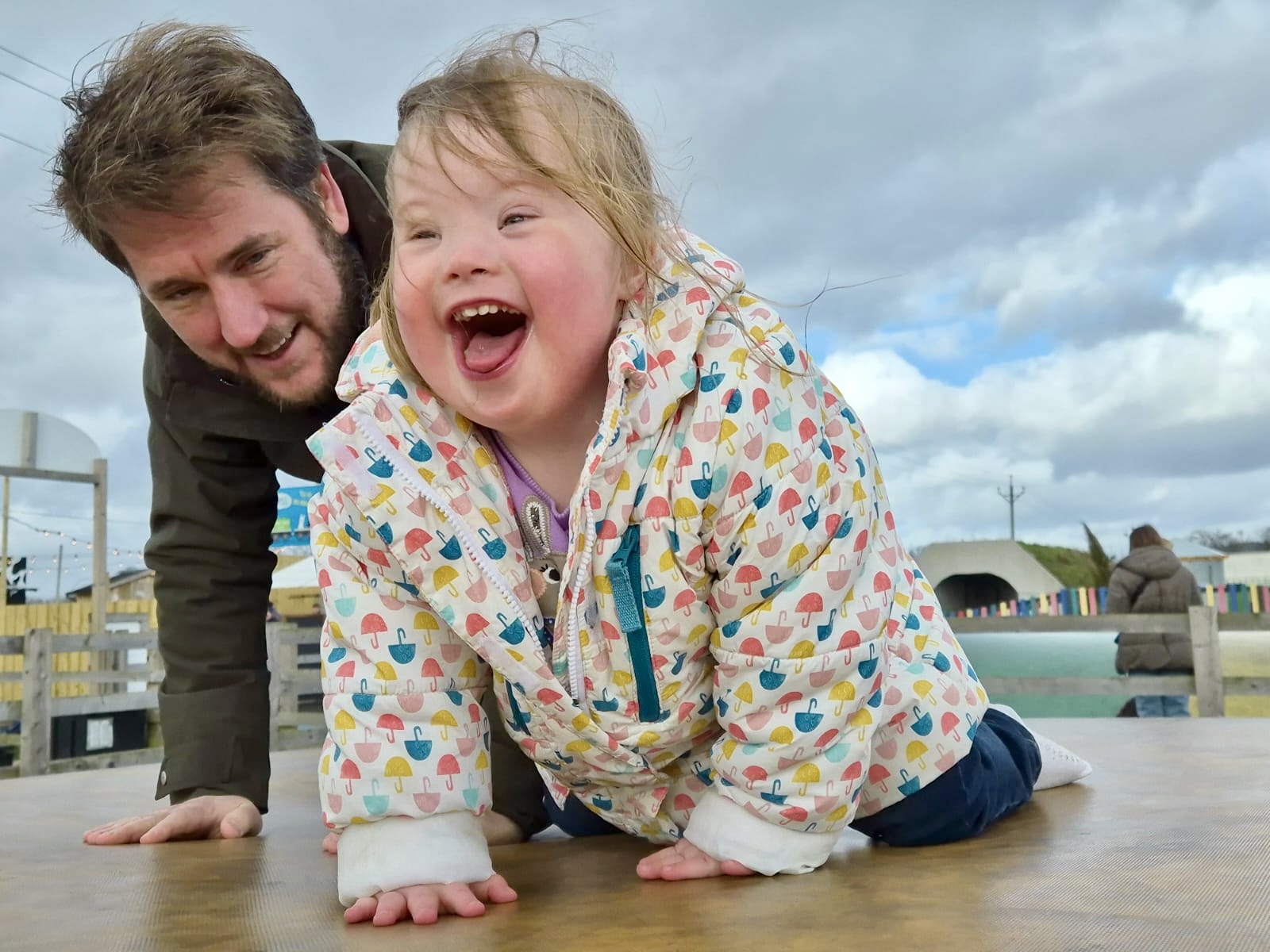
The best support for your child might not look the way other people expect, but any type of movement is something to be incredibly proud of.
Helping Maisy move through the world in the way that works best for her supports her in navigating life. That’s what matters.
Walking and Down syndrome can co-exist, but it’s important to remember that helping your child get where they want to go with confidence is far more valuable than the steps themselves.
If you’re raising a child with Down syndrome too, I hope our journey with Maisy helps you feel a little less alone in yours.
We share more of our everyday life, honest moments, milestones, and everything we’re learning along the way over on Instagram.
Frequently Asked Questions About Walking and Down Syndrome
Can children with Down syndrome walk independently?
Yes, many children with Down syndrome learn to walk independently, although it often happens later than in typically developing children.
Factors like low muscle tone, balance difficulties, joint laxity, and delayed motor development can all affect walking milestones.
Every child develops differently, and progress often happens gradually over time.
At what age do children with Down syndrome usually start walking?
There isn’t one specific age because development varies so much from child to child.
Some children with Down syndrome may begin walking earlier, while others take several years to develop independent walking.
Building strength, coordination, balance, and confidence all play an important role in the process.
Why is walking more difficult for children with Down syndrome?
Walking can be more challenging for children with Down syndrome because of hypotonia (low muscle tone), joint laxity, reduced balance, and coordination difficulties.
These factors can make movement more physically demanding and tiring, especially during longer periods of walking or standing.
Do children with Down syndrome need walkers or gait trainers?
Some children with Down syndrome benefit from walkers or gait trainers while learning mobility skills.
These supports can help improve balance, strength, posture, confidence, and independent movement as walking develops over time.
Why would a child with Down syndrome use a wheelchair if they can walk?
Some children with Down syndrome use wheelchairs for longer distances, busy school days, holidays, or outings that require a lot of walking.
A wheelchair doesn’t always replace walking. Sometimes it simply helps conserve energy, reduce physical exhaustion, and support a child’s independence and inclusion.
Are mobility aids helpful for children with Down syndrome?
Yes, mobility aids can be incredibly helpful for children with Down syndrome.
Walkers, orthotics, gait trainers, supportive footwear, wheelchairs, occupational therapy, and physical therapy can all support mobility, confidence, comfort, and participation in daily life.
Is wheelchair use a setback for a child with Down syndrome?
No, wheelchair use is not a setback.
Mobility support can actually increase independence, inclusion, and quality of life for many children with Down syndrome.
Every child’s mobility journey looks different, and using the right support helps children access the world in the way that works best for them.