

When I think about Down syndrome milestones, I don’t picture charts or timelines anymore. I picture Maisy standing in our living room with balloons brushing the ceiling and a Bluey cake waiting patiently on the table.
Maisy turned four on the 14th of January.
That sentence still makes me pause.
Because Maisy turning four marks a big milestone for us. It’s a reminder of how far she’s come and how much she’s grown.
Birthdays have a way of making you reflect, especially when you’re raising a child with Down syndrome. They have a habit of bringing developmental milestones into focus, whether you want them to or not.
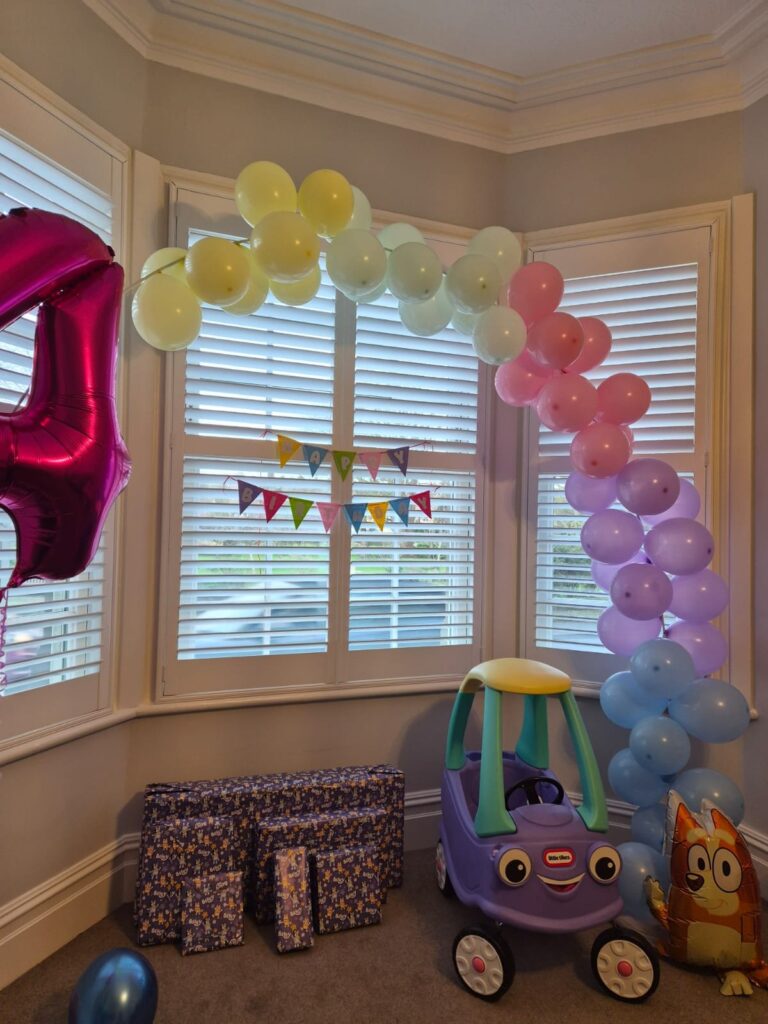
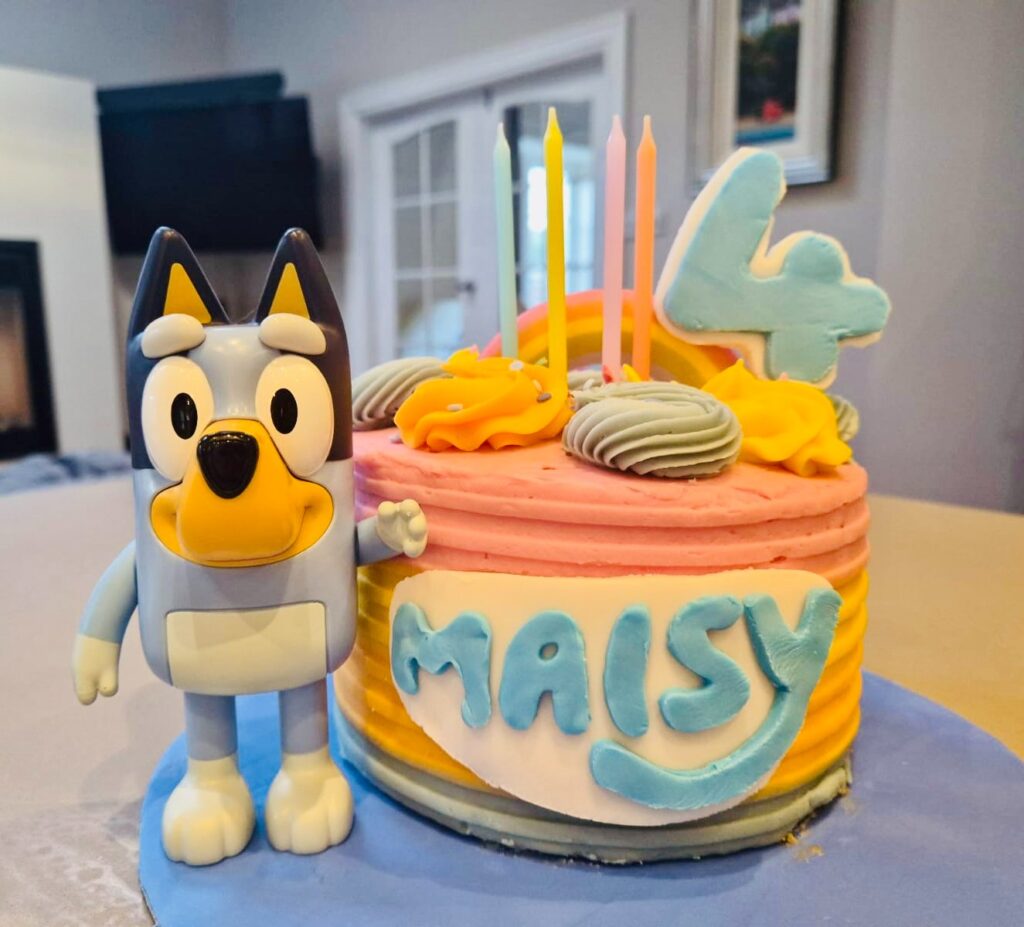
But this year, I wasn’t thinking about what Maisy should be doing at four. I was thinking about what she can do.
Four years ago, I couldn’t have imagined this version of her. She is confident, curious, and independent.
Watching Maisy enjoy a day made just for her felt like more than enough to celebrate.
Celebrating Independence in Children with Down Syndrome
Out of all the presents Maisy opened on her fourth birthday, there was one she kept coming back to: her Bluey Little Tikes car.
The moment she climbed in, her face lit up. She had her hands on the steering wheel, and her feet tucked underneath. Maisy didn’t look to us for help or wait to be shown what to do. She just got on with it.
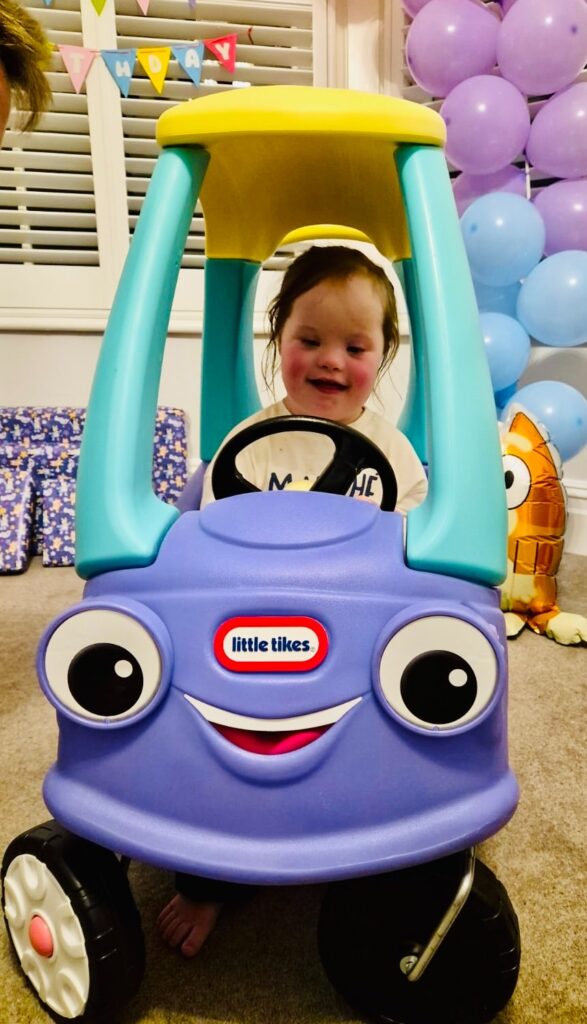
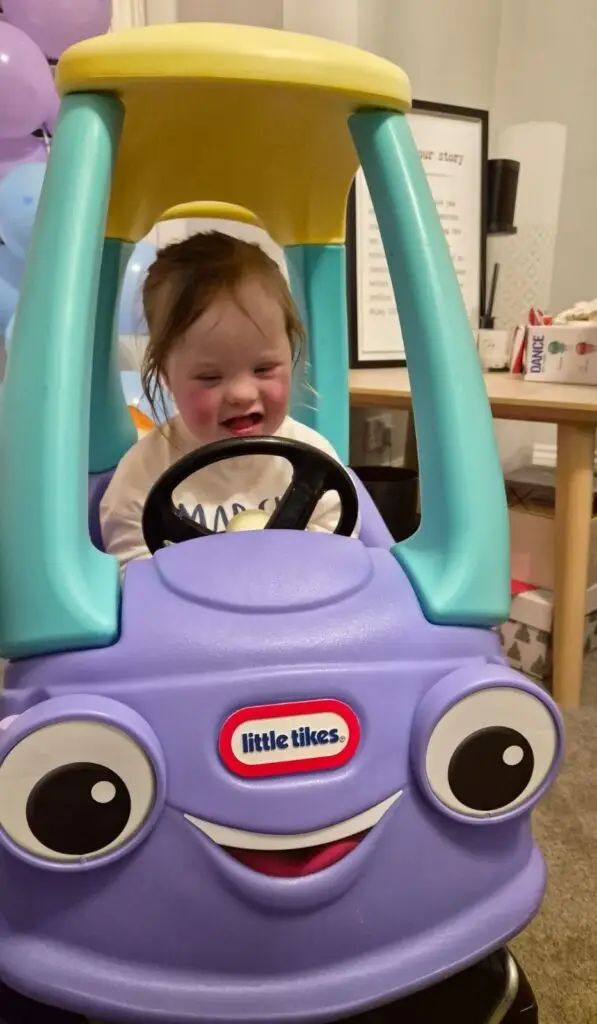
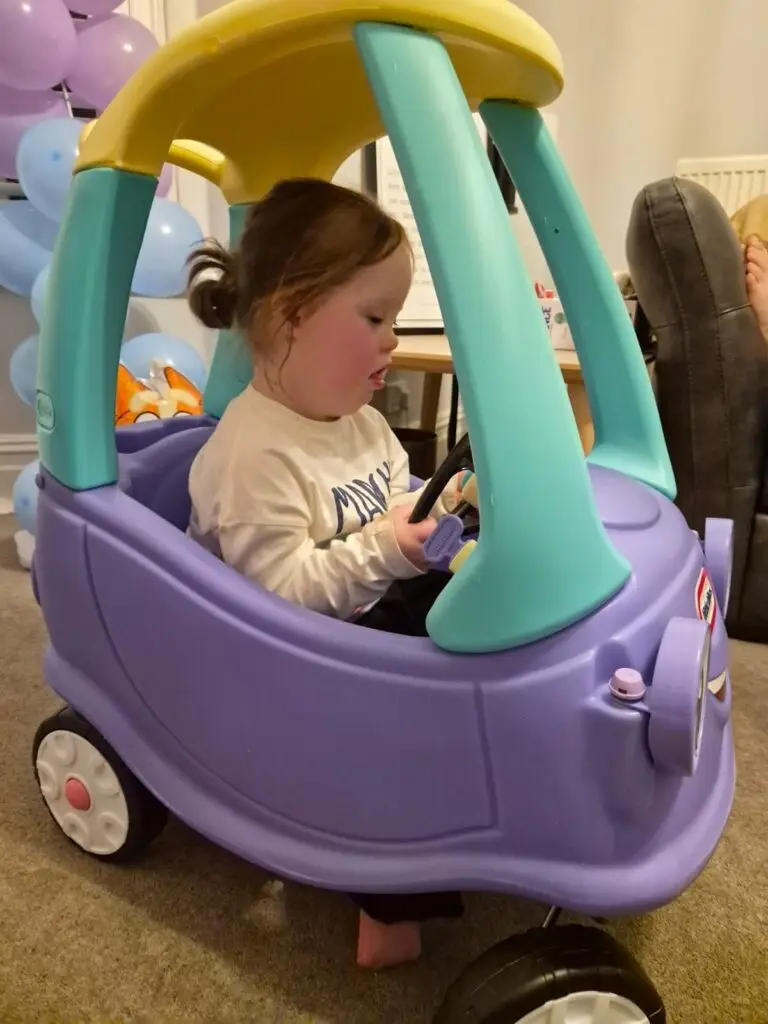
These photos of her mid-laugh, cheeks flushed with excitement, are my favourite. They’re perfect because they capture Maisy exactly as that moment felt. Just Maisy – happy – doing her own thing. These photos catch something I don’t always manage to put into words.
When you’re raising a child with Down syndrome, moments like this carry real meaning.
Independence doesn’t always arrive in big, obvious ways. With Maisy, it often shows up through play.
Something as simple as climbing into a toy car reflects growing confidence, strength, and coordination that’s hard-won over time.
Maisy’s fourth birthday was different because she was fully present, confident, and clearly proud of herself.
Watching her move, explore, and take the lead in her own way was a reminder of how far her development has come.
Down syndrome milestones can’t be measured by how it compares to those of other children. It’s measured by noticing the moments when your child does something for themselves that they couldn’t do before.
And on this birthday, seeing Maisy take the wheel – literally – felt like one of those moments worth holding onto.
Why Development Looks Different for Children with Down Syndrome
One of the biggest lessons I’ve learned since becoming Maisy’s dad is that development for children with Down syndrome happens at its own pace.
When Maisy was younger, I spent far too much time worrying about how she compared to other children her age. But what I’ve come to understand is that children with Down syndrome reach developmental milestones differently.
Down syndrome affects motor, speech, and cognitive development.
Many children also have low muscle tone, which means strength building takes longer. Balance and coordination often need extra practice, and motor skills – both gross and fine – can take more time to come together.
That doesn’t mean your child isn’t capable. It just means their body needs a different pace.
With Maisy, we’ve learned to be patient.
Her milestones came later than expected, but when they arrived, every achievement felt hard-won and incredibly special.
I’ve learned that comparing children with Down syndrome to developmental charts only tells part of the story. The real progress shows up in confidence, curiosity, and connection. It shows up when Maisy plays with new toys, interacts with others, or finds joy in something that once felt difficult.
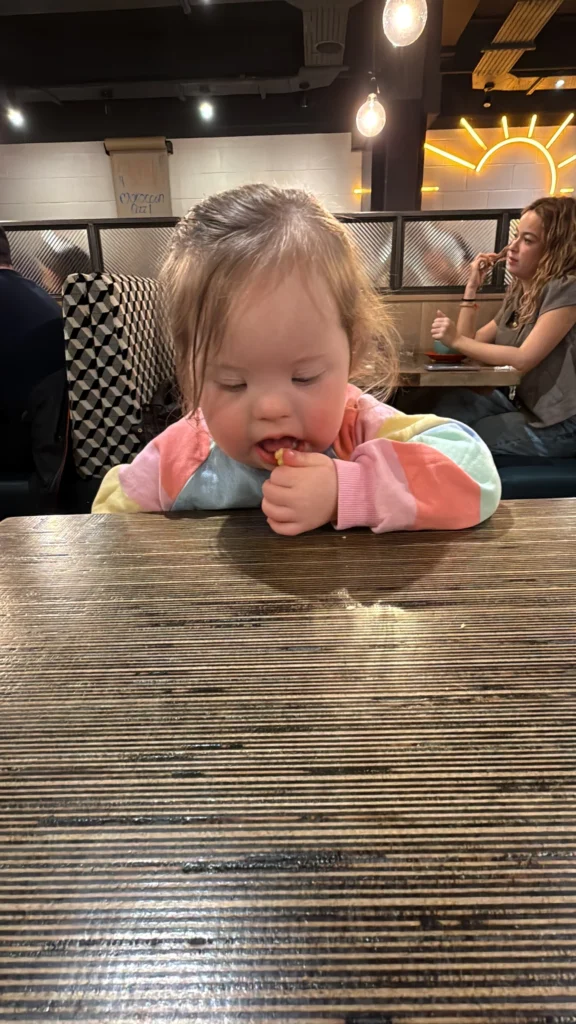
Children with Down syndrome don’t develop less. They just develop at their own pace. And once I started viewing Maisy’s development through that lens, it became much easier to notice just how much growth was happening right in front of me.
Understanding Down Syndrome Developmental Milestones
When you first start learning about Down syndrome developmental milestones, it’s easy to feel overwhelmed. There’s a lot of information out there, and much of it is presented in charts, tables, and developmental stages tied neatly to age ranges.
Maisy taught me that those milestones are best seen as guides, not targets.
Children with Down syndrome often follow the same developmental sequence as their peers, but they move through developmental stages in their own way. And because they’re all individuals, the effect of their extra genetic material varies widely.
Down syndrome developmental milestones are more about noticing new skills, growing confidence, and the way your child starts to interact more with the world around them.
Why Milestone Charts Don’t Tell the Whole Story
Milestone charts can give you a rough idea of what development might look like and can flag when extra support or services could be useful.
But they only tell part of the story.
Maisy has had bursts of progress, quiet plateaus, and moments where it suddenly feels like everything clicked into place. None of that shows up neatly on a chart, but it counts!
Down syndrome milestone charts and developmental milestones charts often focus on when a skill is expected to appear, not how it appears or what it means for your child. They don’t show the effort behind each step or the repetition it takes.
With Maisy, I’ve learned that some of her biggest leaps wouldn’t stand out on any chart.
Charts can’t measure determination. They can’t capture personality. And they definitely can’t show the love that surrounds a child as they grow.
So while developmental charts have their place, they shouldn’t define your child – or your expectations.
Gross Motor Development and Physical Milestones
When I think about Maisy’s gross motor development, I don’t think in terms of charts or ages. I think about how her body has learned movement in its own time.
Physical development didn’t come quickly for Maisy. Sitting, crawling, standing, and eventually walking all took longer than we first expected.
While gross motor development arrives quickly or easily for other families, many children with Down syndrome have low muscle tone. Strength takes time to build, and Maisy’s body needed extra patience, extra practice, and plenty of encouragement along the way.
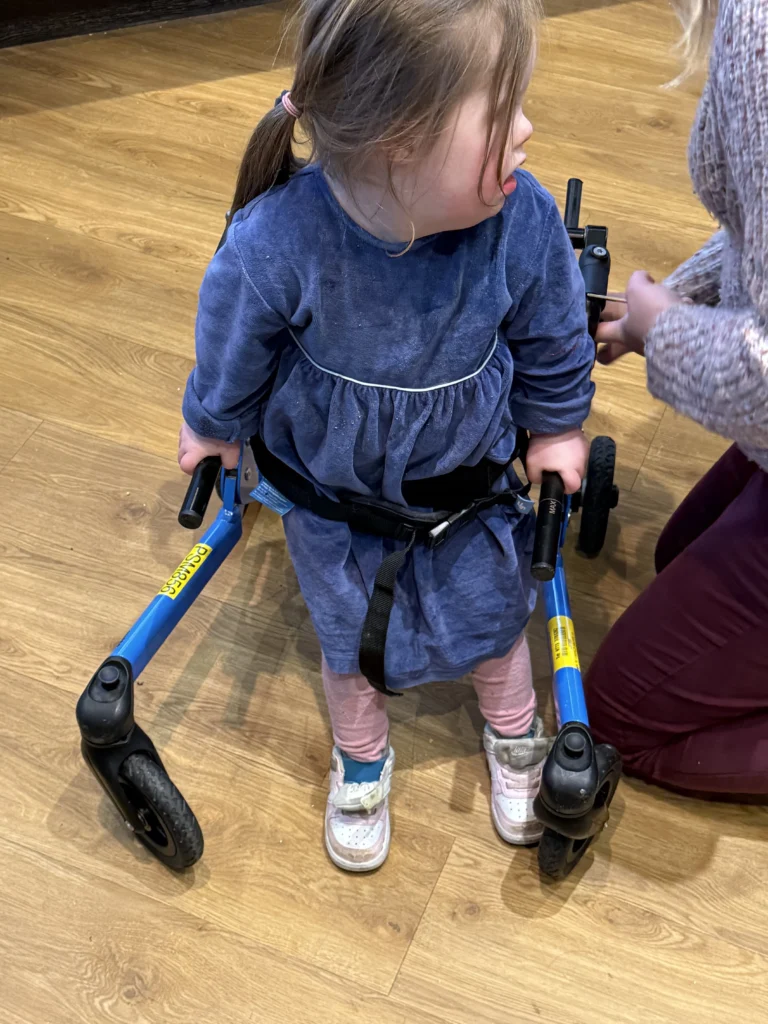

Walking has been one of the biggest parts of Maisy’s gross motor journey. Getting a walker helped tremendously. Seeing her take those first supported steps is one of those Down syndrome milestones that will stay with me forever.
On her fourth birthday, I was reminded of what it took for Maisy to get to where she is. I could see progress that had been built slowly over time. She moved with more confidence, and she trusted her body a little more than she used to.
That’s the part of physical development that milestone charts can’t show:
The determination behind each of her steps and how she trusts her body more each year.
For children with Down syndrome, gross motor milestones aren’t about keeping up with other children. They’re about recognising forward movement, however small it might look from the outside.
Fine Motor Development and Physical Milestones
Fine motor skills grow through repetition and play. For Maisy, holding toys, turning pages, and exploring objects with curiosity have taken time to develop.
These moments are easy to overlook if you’re focused only on bigger milestones. But they matter.
On her fourth birthday, I noticed how confidently her hands worked while she concentrated on the steering wheel of her Bluey car. The skills she’s been practising slowly came together in that moment, and I couldn’t be prouder.
For us, that’s what fine motor development looks like. It’s not about ticking off specific milestones, but watching Maisy figure out how to do something for herself that once felt tricky.
Celebrating Progress at Your Child’s Own Pace
One of the hardest things I’ve had to learn as a parent is how to slow down my expectations.
When your child has Down syndrome, it’s easy to feel like you’re constantly measuring progress, even when you don’t mean to.
You notice ages, stages, and what other children are doing, and suddenly everything feels like it’s happening on a clock you can’t control.
What Maisy has taught me is that development doesn’t respond well to pressure.
She achieves things when she’s ready, when her body feels strong enough, and when her confidence catches up.
And when those moments come, they’re hers.


Progress at your child’s own pace might be a new movement, a new skill, or simply the way your child approaches something they once avoided.
Those moments are all signs that development is happening. It’s just in a way that fits your child, not charts.
Over time, I’ve learned to celebrate those moments without rushing ahead to the next thing. Because when you slow down and really notice progress as it’s happening, you realise just how much growth is already there.
If You’re Worrying About Down Syndrome Milestones
If you’re worrying about Down syndrome milestones, you’re certainly not alone.
I’ve been there. I remember lying awake, replaying conversations, scrolling through charts, and wondering if Maisy is behind or if I should be doing more.
It’s an easy place to get stuck, especially in the early years when everything feels uncertain.
So I’m going to tell you what I wish someone told me sooner:
Milestones are not a verdict of your child’s future.
Children with Down syndrome don’t reach milestones on a fixed schedule. Some take longer. And some show up in ways that aren’t always recognised as milestones at all.
What matters most is progress.
If your child is developing, learning, and finding their way forward, then milestones are happening, even if they don’t match what you expected.
Confidence, curiosity, connection, and independence all count. They’re just as real as walking, talking, or ticking off a box on a chart.
So if you’re feeling worried, take a moment to look at how far your child has already come. Look at what they can do now that they couldn’t do before. Those moments tell a much more honest story than any timeline ever could.
What Maisy Turning Four Taught Me as a Dad
When the house finally went quiet on Maisy’s birthday, I found myself sitting with the day a little longer than usual.
The balloons were starting to sag. Wrapping paper was piled in the corner. Her Bluey car was parked where she’d left it, exactly where she’d decided it belonged. And Maisy was fast asleep, completely worn out from a day that had been full in all the right ways.
Turning four didn’t suddenly change who she is. It didn’t unlock a new stage overnight or tick off a list of expectations.
But it did give me a moment to pause and really see her exactly as she is right now.
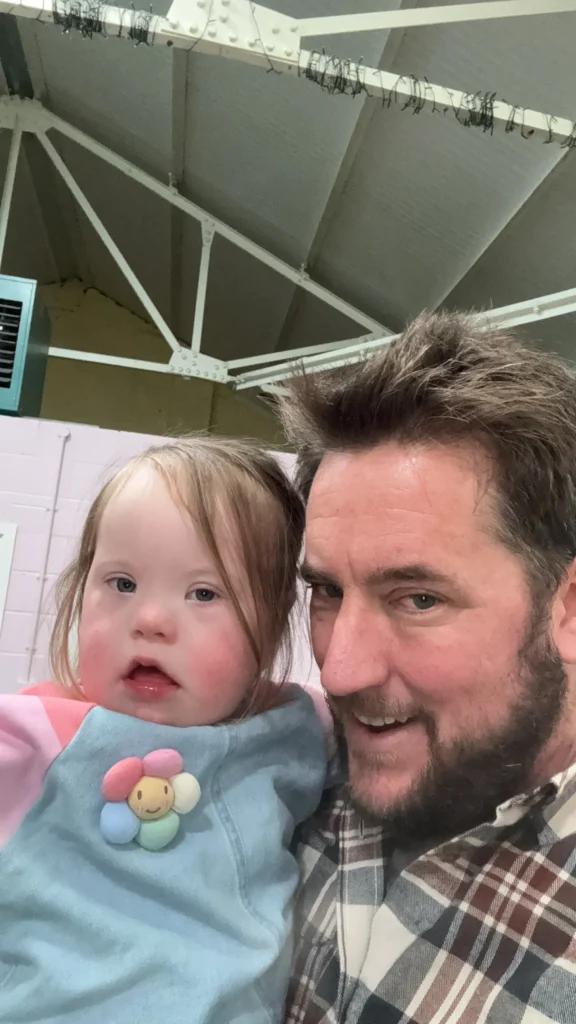
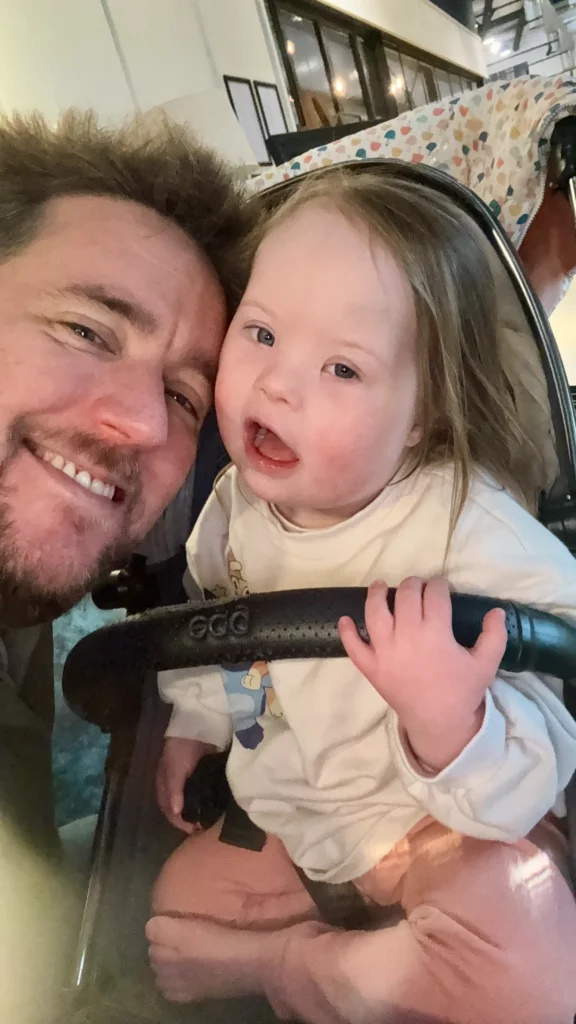
Maisy turning four taught me that progress doesn’t need to be loud and that independence can show up in small decisions.
As a dad, I’ve learned that my job isn’t to measure her against timelines or worry about what comes next.
I only have to notice and celebrate her.
Maisy doesn’t need to be anywhere other than where she is right now. And watching her turn four – happy and completely herself – reminded me that Down syndrome milestones aren’t about where our children should be, but about noticing how far they’ve already come.
Questions Parents Often Ask About Down Syndrome Milestones
Do children with Down syndrome reach the same developmental milestones as other children?
Children with Down syndrome generally reach the same developmental milestones as other children, but often at a different pace.
Sitting, walking, talking, and fine motor skills usually develop later, especially in the early years.
That difference doesn’t mean progress isn’t happening. It simply means development unfolds differently.
What affects Down syndrome developmental timelines the most?
Many factors can influence Down syndrome milestones, including low muscle tone, physical development, hearing loss, heart disease, and access to early support services.
Physical therapy, speech therapy, and working with trained professionals can all help your child build strength, coordination, and communication skills over time.
When do children with Down syndrome usually start walking?
Walking is one of the most variable gross motor milestones for children with Down syndrome. Some children walk during toddlerhood, while others take longer and may use walkers or other mobility support.
What matters most is steady motor development, not the age at which walking begins.
How does Down syndrome affect language development and speech?
Language development often progresses more slowly for children with Down syndrome.
Many understand far more words than they can say, and speech may take time to become clear.
Using signs, gestures, and visual cues alongside spoken words can help your child communicate while speech continues to develop.
How can I track progress without relying only on milestone charts?
Milestone charts can be useful guides, but they don’t tell the whole story.
Progress often shows up in confidence, interaction, problem-solving, and how your child explores objects or engages with people.
Watching how your child learns, adapts, and develops at their own pace gives a much fuller picture than charts alone.