
Down syndrome hypotonia is something many parents hear about soon after their child is born, but understanding what it actually means can take time.
When we were first told that Maisy had low muscle tone, it was just another medical term in a long list of things doctors were explaining to us in those early hours and days after her Down syndrome diagnosis.
At that stage, we didn’t yet know how much hypotonia could influence everyday parts of her development. Things like movement, balance, motor skills, and muscle strength can all be affected when a child has decreased muscle tone.
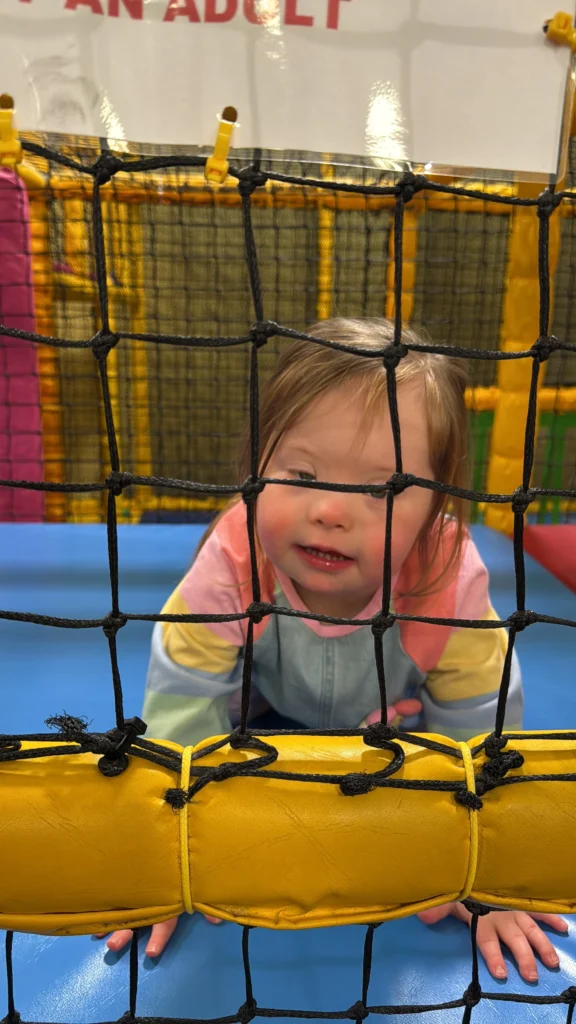
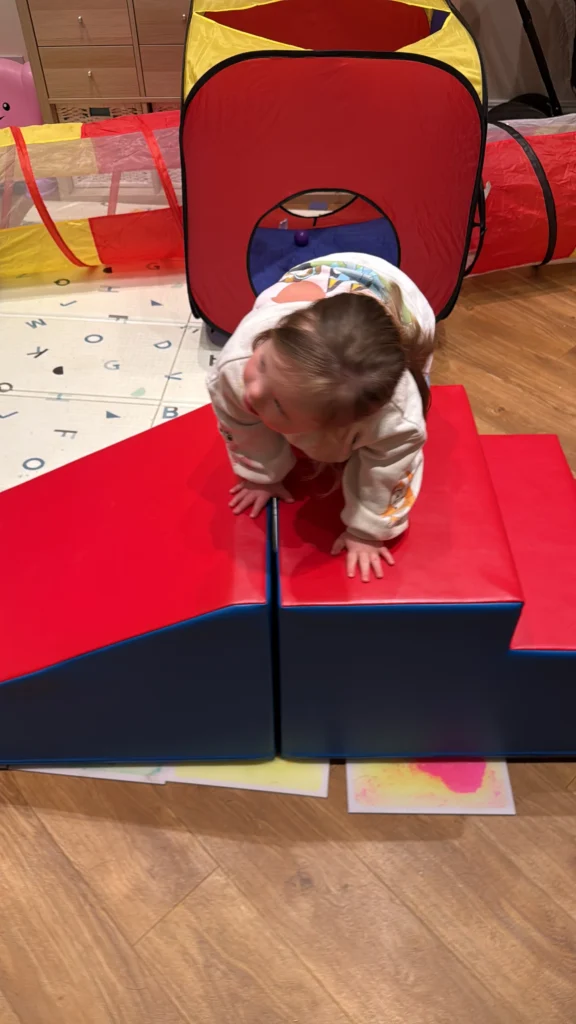
But over the past four years, we’ve learned that low muscle tone doesn’t define what your child will be able to do. What it really changes is the pace at which those skills develop.
Children with Down syndrome, which is a genetic disorder, may experience developmental delay in certain areas, especially movement and coordination. But progress still happens.
This article shares what hypotonia in children with Down syndrome has looked like for Maisy.
If you’re raising a child with Down syndrome and trying to understand low muscle tone, I hope our experience helps make it feel a little less overwhelming.
What Is Hypotonia in Down Syndrome?
One of the medical terms we started hearing very early on after Maisy was born was Down syndrome hypotonia, which simply means low muscle tone.
Muscle tone refers to the amount of tension or resistance in the muscles when the body is at rest. In children with Down syndrome, this muscle tone is often lower than what doctors consider normal tone, which is why hypotonia is sometimes described as decreased muscle tone.
Because of this low tone, your baby’s muscles may feel softer and less firm than those of other children. Doctors sometimes describe babies with hypotonia as having a slightly floppy quality or even a rag doll feel when they are picked up, and that was exactly the word the specialists used when explaining it to us.
Low muscle tone can affect many areas of your child’s development because muscles play such an important role in motor control, motor skills, and overall body strength.
Things like holding their head up, sitting, crawling, and walking can take longer because your baby’s muscles need more time to build strength.
Hypotonia doesn’t mean your child’s muscles are weak or that they won’t learn these skills. It simply means their muscle function may develop more slowly, and they may need extra support through physiotherapy or occupational therapy to help improve motor control and coordination.
For children with Down syndrome, hypotonia is usually present from birth because of how their central nervous system, spinal cord, and overall nerve and muscle function develop.
Doctors will often look at the symptoms of hypotonia, such as poor reflexes, joint laxity, or ligamentous laxity, alongside other developmental signs when evaluating your baby.
In some cases, tests may be used to rule out other underlying conditions, neurological disorders, or rare muscle disorders.
Because of this, your child’s doctor will usually monitor developmental milestones, motor skills, and muscle strength closely in the early years to ensure an accurate diagnosis and the right support if delays appear.
Signs of Low Muscle Tone in Children With Down Syndrome
One of the things we didn’t fully understand at first was what low muscle tone would actually look like in everyday life.
When I first held Maisy, I didn’t immediately notice anything unusual. I just assumed most newborn babies don’t have much strength when they’re first born anyway.
But as the days and weeks went on, it became clearer what the doctors meant when they described her as having Down syndrome hypotonia.
Her muscles had less tension, and she struggled to do some of the things many babies gradually begin to manage as they grow stronger.
One of the earliest signs was head control. Many babies begin holding their head steady fairly quickly, but Maisy found this much harder because her muscles simply didn’t have the same level of strength yet.
When your baby has Down syndrome hypotonia, their muscles may also feel soft, and their arms or legs may hang more loosely when you pick them up.
You might also notice that gross motor skills develop more slowly. Things like rolling, sitting, crawling, and standing all require muscle strength, coordination, and balance.
Because hypotonia affects your child’s muscles, it can also lead to joint laxity, where joints move more freely than usual. Some children later develop things like flat feet, which can affect balance and posture as they grow.
Low muscle tone can also affect much more than just movement.
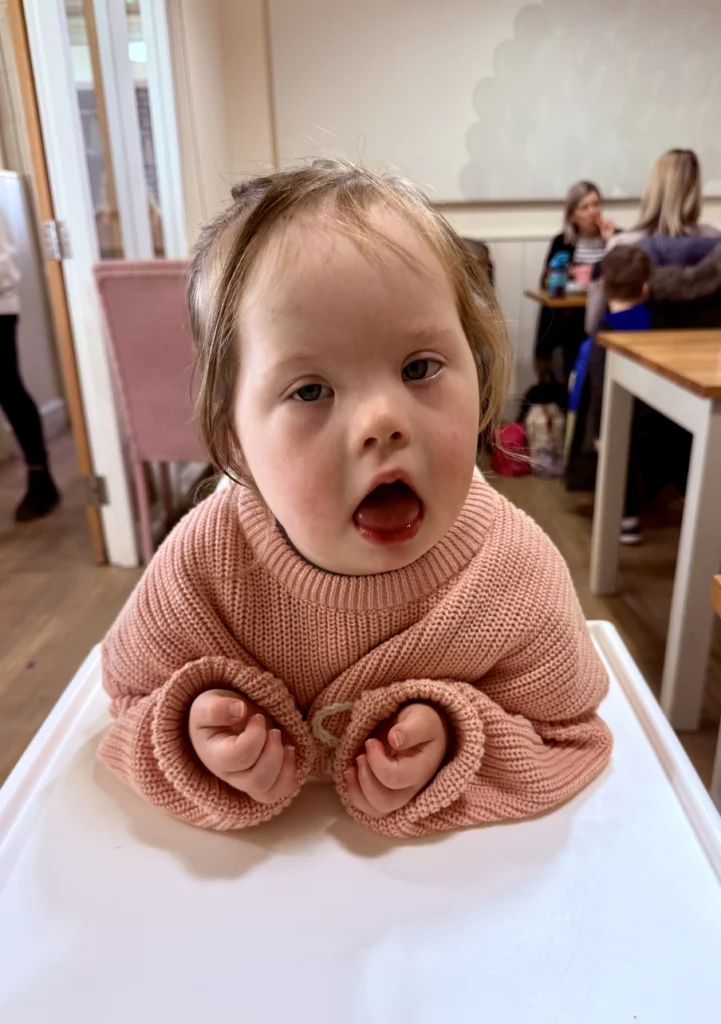
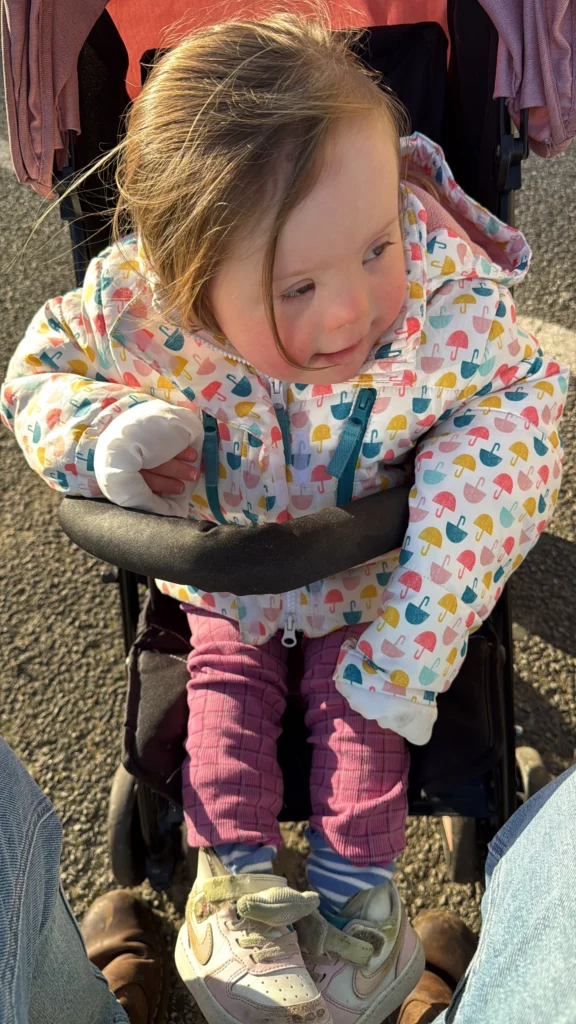
Because muscles are involved in so many everyday functions, hypotonia can influence things like posture, joint movement, feeding, balance, and overall motor skills.
That doesn’t mean those milestones won’t happen. It simply means that building muscle strength and improving motor control often takes more time.
How Low Muscle Tone Can Affect Movement in Children With Down Syndrome
One of the areas where low muscle tone often becomes most noticeable is movement.
Because muscle tone plays such an important role in motor control, motor skills, and overall body strength, children with Down syndrome hypotonia often take longer to reach certain developmental milestones.
Things like holding their head steady, sitting upright, crawling, standing, and eventually walking all rely on your child’s muscles working together to support their body.
When those muscles have decreased muscle tone, building that strength can take longer.
That was very much the case with Maisy.
Sitting up, crawling, and standing all took longer than they did for her siblings. A big reason for this was decreased core muscle strength, which meant her body needed more time to develop the stability required for movement.
And in Maisy’s case, there were other challenges alongside the hypotonia as well. She spent the first six weeks of her life in special care, and when she finally came home, she was still on oxygen because of a heart defect. At four months old, she also had open-heart surgery.
Naturally, things like tummy time, physiotherapy exercises, and early physical activity were harder to do during those early months. When you’re dealing with hospital stays, oxygen tubes, and recovery from surgery, building muscle strength isn’t always straightforward.
But little by little, progress came.
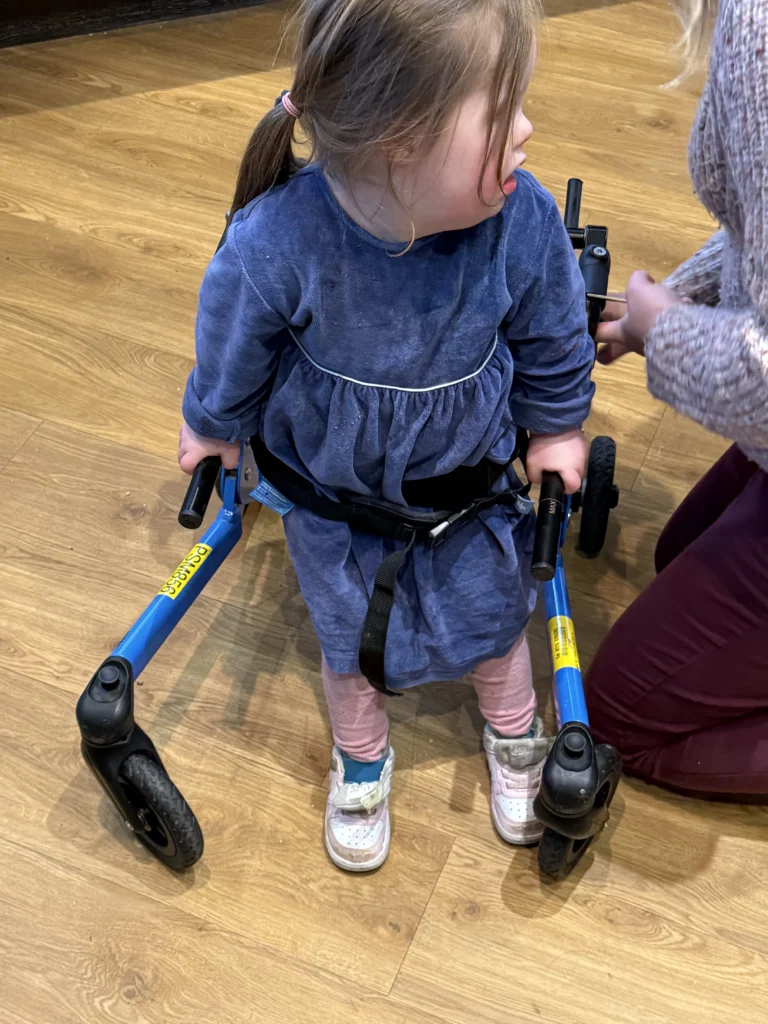
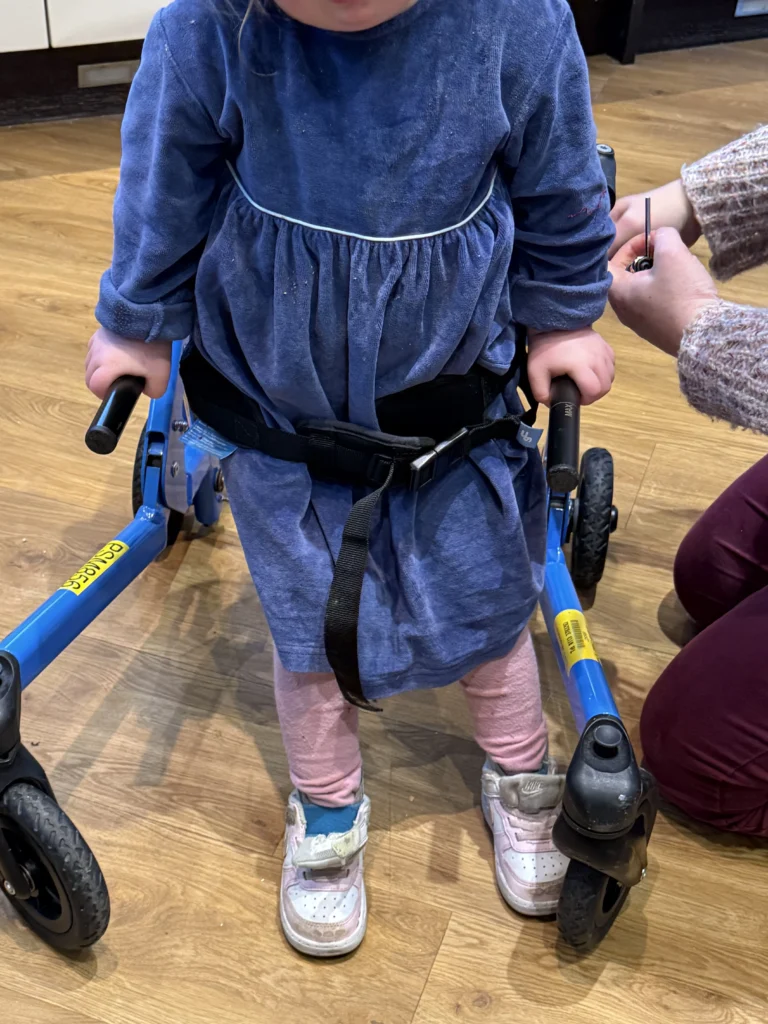
Before Maisy had a walker, she used a standing frame that helped support her while she practised holding herself upright.
We’d also do simple things at home, like letting her stand against the sofa or the bed so she could feel that support while her muscles worked to hold her up.
These kinds of activities may seem small, but they help improve motor control and gradually strengthen your child’s muscles.
Now, at four years old, Maisy still can’t walk independently yet. She uses a walker to help her move around.
And while that might sound like a big developmental delay compared to other children, what we’ve learned over time is that progress doesn’t stop just because it’s slower.
Her strength is improving all the time. We can see it in the way she moves, the way she balances herself, and the way her motor skills and body strength continue to grow.
It may not follow the same timeline as other children, but the progress is there. And that’s the part that matters.
How Low Muscle Tone Can Affect Feeding in Children With Down Syndrome
One of the things we didn’t expect was how much low muscle tone could affect feeding.
When people talk about hypotonia, they often think about movement and motor skills. But muscles are involved in far more than just walking or sitting. The muscles in the mouth, tongue, and throat also play a huge role in swallowing and eating safely.
For many children with Down syndrome hypotonia, feeding difficulties are one of the symptoms of hypotonia that parents encounter early on.
Feeding has been one of Maisy’s biggest challenges linked to her low muscle tone.
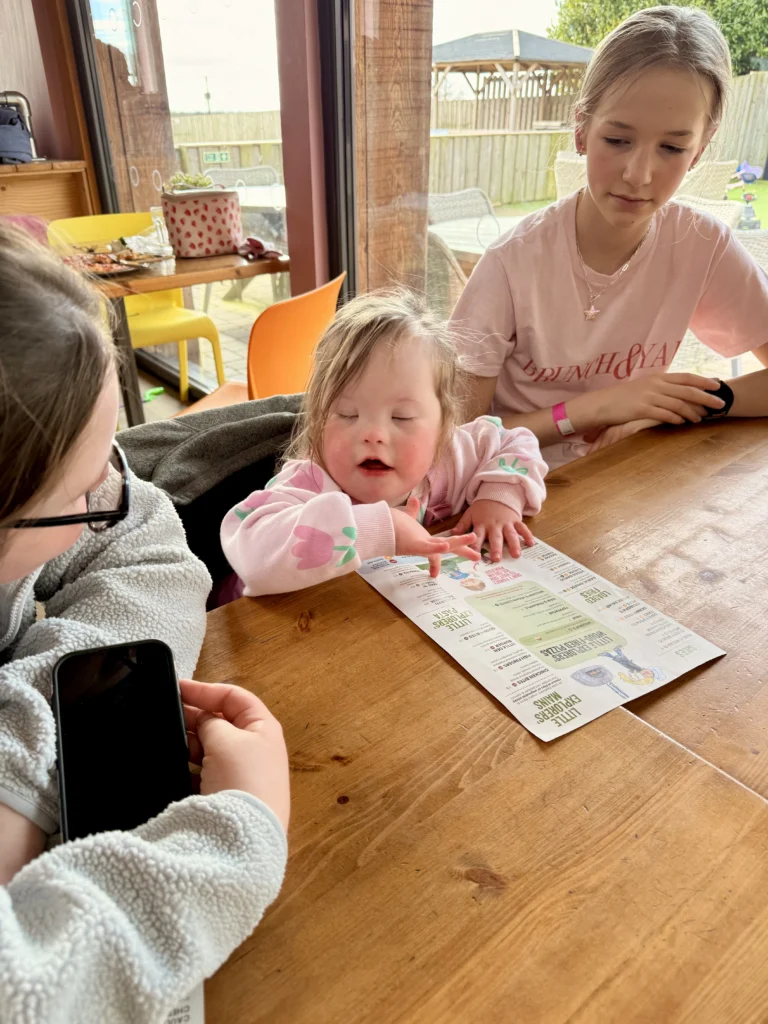
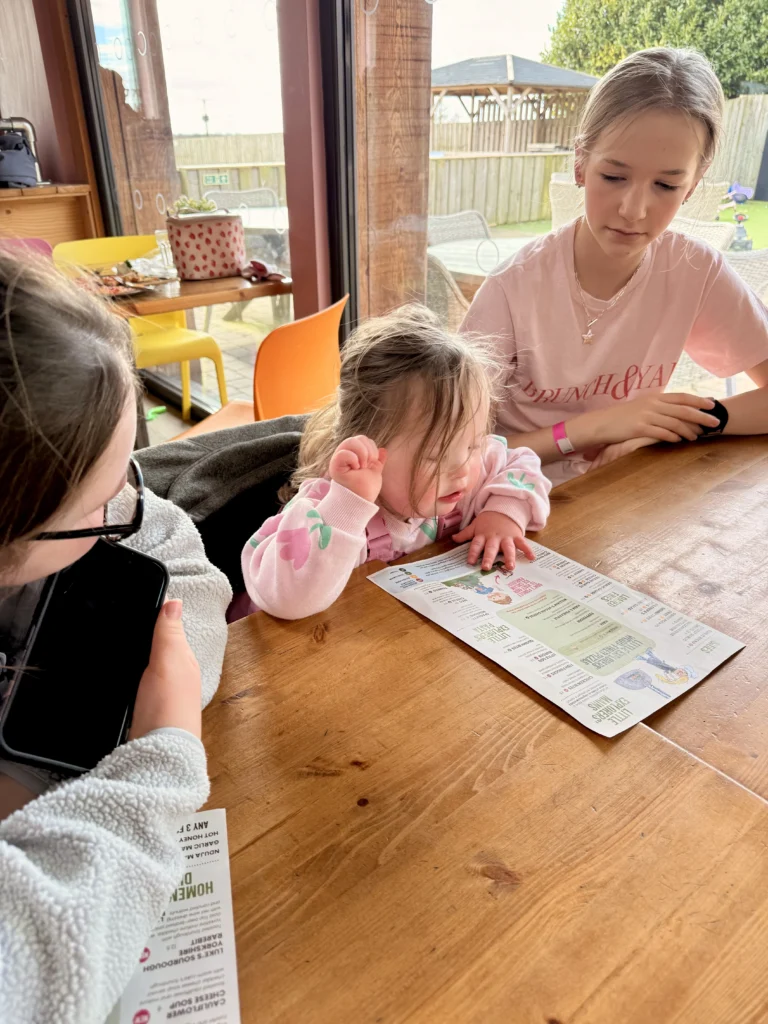
Because the muscles in her throat weren’t strong enough to coordinate a safe swallow, she developed what doctors described as an unsafe swallow. Instead of milk going down into her stomach the way it should, it was sometimes entering her lungs. This caused aspiration and repeated chest infections, which meant feeding normally just wasn’t safe for her.
In Maisy’s case, the muscle function needed for swallowing simply hadn’t developed enough yet. Some children with hypotonia may also have things like an underactive gag reflex, reduced oral muscle strength, or difficulty coordinating the tongue and throat muscles needed for swallowing.
To protect her lungs and make sure she was getting enough nutrition, the doctors placed a PEG feeding tube directly into her stomach. That meant fluids and milk could go straight into her stomach through the tube rather than being swallowed.
At the time, it felt like another huge adjustment. But it also meant Maisy could safely receive the nutrition her body needed while her muscles continued to develop strength.
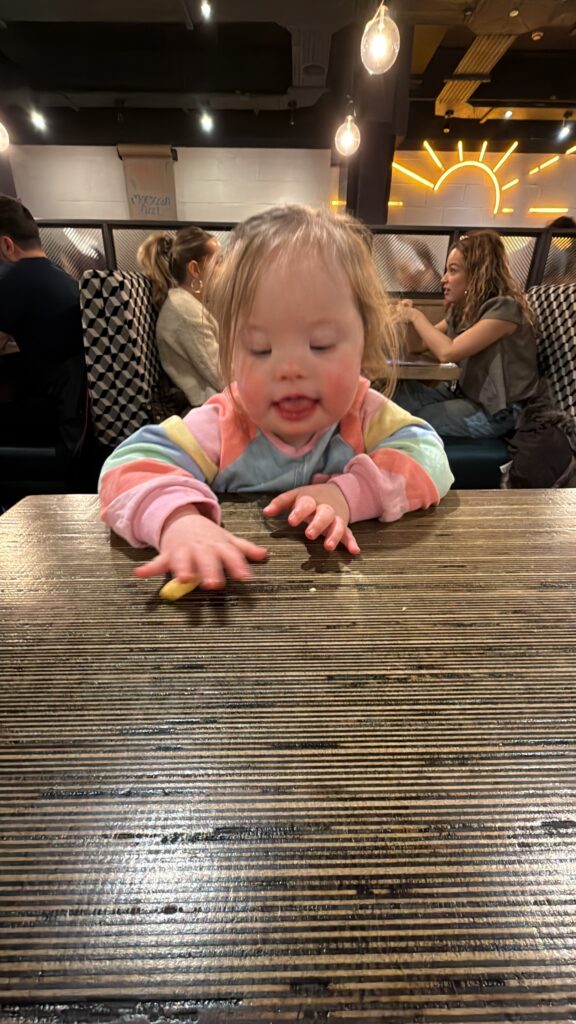
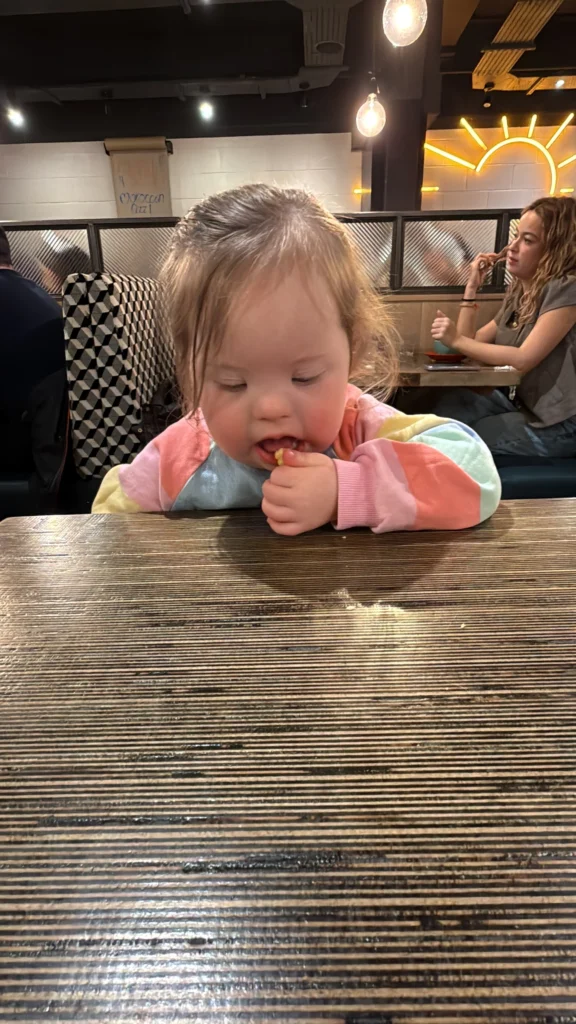
Over time, things slowly began to improve.
As her strength built, she was gradually able to tolerate different levels of food and drink thickness. At first, she could only manage extremely thick textures, but little by little, she progressed to thinner liquids.
Even now, eating and drinking still take more effort for her than it might for other children. Because the muscles involved in chewing and swallowing can tire more easily, meals can take longer and require more patience.
But compared to where she started, the progress has been incredible. There was a time when she couldn’t safely swallow at all, and now she’s slowly learning to eat and drink alongside everyone else.
The Role of Physiotherapy in Building Strength
When a child has Down syndrome hypotonia, building strength doesn’t usually happen on its own. Their muscles often need a bit more help learning how to support the body, develop balance, and improve motor control.
Maisy has a physiotherapist through the NHS, and that support has made a huge difference. We also attend a couple of groups during the week where physiotherapy activities are built into play, which helps her practise movement in a fun and relaxed way.
For many families, early intervention and regular physiotherapy can play an important role in helping their child build muscle strength and develop their motor skills.
A lot of the exercises that form part of physiotherapy aren’t complicated. They focus on helping your child’s muscles develop strength, coordination, and balance through simple physical activity.
Maisy’s physiotherapist also recommended that we do activities with her at home.
Sometimes that meant helping her stand against the sofa or the bed so she could lean slightly while her muscles worked to keep her upright. Other times, we used gym balls and different stretching exercises recommended by her physiotherapist to improve balance and joint movement.
These types of activities help strengthen the muscles involved in things like sitting, standing, and eventually walking.
What I’ve learned through all of this is that physiotherapy for children with Down syndrome isn’t about forcing progress. It’s about creating the right opportunities for muscle strength and body strength to grow.
Therapists guide you, but a lot of the real work happens in everyday life. Simple things like play, movement, and repetition slowly help build strength, balance, and motor skills over time.
What You Should Know About Low Muscle Tone
When you first hear terms like low muscle tone or hypotonia, it can sound scary.
It’s easy to start thinking ahead and worrying about all the things your child might struggle with. Those worries were definitely there for us in the beginning.
What time has shown me, though, is that development doesn’t stop just because it moves at a different pace.
For most children with Down syndrome hypotonia, progress still happens.
It just looks different from child to child, and the symptoms of hypotonia can vary depending on things like muscle strength, health conditions, and the support your child receives.
Hypotonia itself is usually considered a lifelong condition, but that doesn’t mean your child’s abilities stay the same.
With the right treatment, therapy, and daily activities, children can continue building strength and improving their motor skills over time.
With Maisy, we’ve seen how small improvements in muscle strength, movement, and coordination gradually add up.
The exercises, the therapy, and the daily activities all help.
And while things may not always follow the same timeline as with other children, progress is still happening.
Looking at Maisy now, I can see that progress clearly. Her strength keeps improving, even if it takes a little longer than we once expected.
In the early days, I used to worry about whether she would walk, whether she would be able to eat and drink normally, and whether things would ever feel easier.
Those worries don’t sit with me the same way anymore.
Though we do hope for specific progress, like that by the time she starts school in September she might be able to eat and drink more independently, we know she’ll get there in her own time.
Because when you watch your child keep trying, keep learning, and keep getting stronger, you realise that progress doesn’t have to be fast to matter.
Maisy is amazing. And at the end of the day, what will be will be.