

When I first began trying to understand Down syndrome development, what I wanted most was clarity.
Statistics felt overwhelming, and inspirational quotes didn’t mean much yet.
I simply wanted a realistic picture of what the early years with Maisy might look like.
If you’re parenting a child with Down syndrome or have recently received a diagnosis, this guide is meant to offer that overview.
From birth through toddlerhood, development often follows the same sequence as other children, but at a different pace.
Understanding why development looks this way can make those early years feel far more manageable.
What Is Down Syndrome?
Down syndrome is a genetic condition that occurs when a baby is born with an extra copy of chromosome 21. Most people have 46 chromosomes in each cell, while a person with Down syndrome has 47.
That extra chromosome affects how their body and brain develop.
Because chromosomes carry genetic instructions, the additional genetic material influences muscle tone, learning pace, speech development, growth patterns, and sometimes overall health.
In most cases, Down syndrome happens randomly during cell division and is not caused by anything you did or did not do.
The most common type is Trisomy 21, where every cell has an extra chromosome 21.
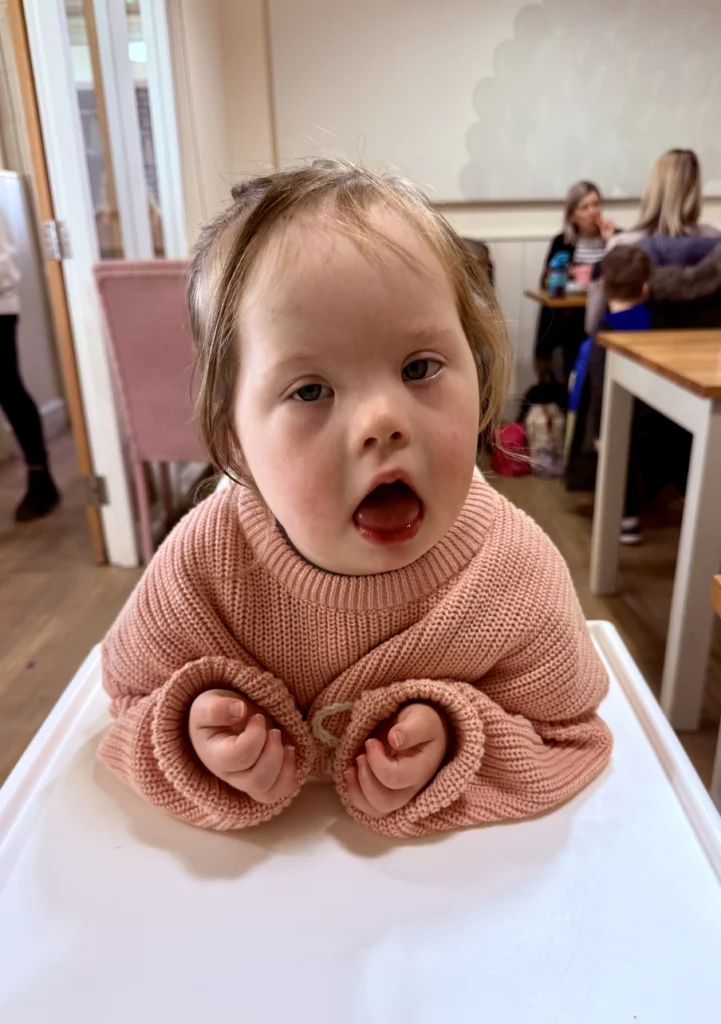
Less commonly, a child may have translocation Down syndrome or mosaic Down syndrome, where only some cells carry the extra chromosome. Because of this variation, development can look slightly different from child to child.
Down syndrome is not a disease, and it is not contagious. It is a lifelong genetic condition.
Children with Down syndrome typically experience developmental delays. Many also share certain physical characteristics, such as low muscle tone or distinct facial features, and some may have associated health conditions that require monitoring.
However, Down syndrome does not determine personality, interests, or potential.
Children with Down syndrome grow, learn, form relationships, attend school, and develop independence.
Understanding Down syndrome at a biological level helps explain how development unfolds. From there, the focus naturally shifts toward support, early intervention, and steady progress.
How Down Syndrome Affects Early Development
A baby with Down syndrome is still just a baby. It’s worth saying, because this realisation often gets lost in medical explanations.
You’ll still be changing nappies at all hours, pacing the room during sleep regressions, and trying to work out why your baby is crying. You’ll still celebrate small smiles, first giggles, and the quiet moments when they finally settle.
Down syndrome doesn’t replace normal baby life. It sits alongside it.
What’s different is not the experience of parenting, but the pace of development. You may find yourself navigating familiar baby milestones alongside a more gradual developmental timeline.
One of the first areas where this difference in pace often becomes noticeable is physical development.
Physical and Motor Development in Children with Down Syndrome
Physical development is often one of the first areas where you might notice a difference.
Many babies with Down syndrome are born with low muscle tone, which can make your baby feel softer or floppier when you hold them.
Because muscle tone helps provide stability, movements like lifting the head, rolling over, or sitting independently may take more time and repetition.
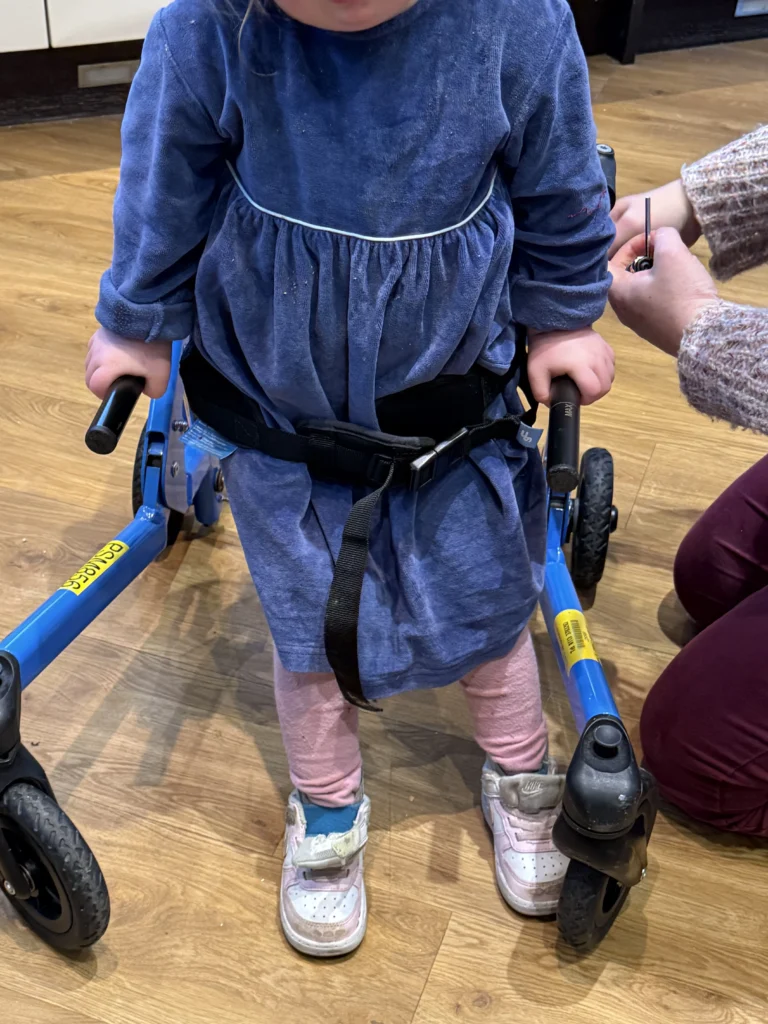
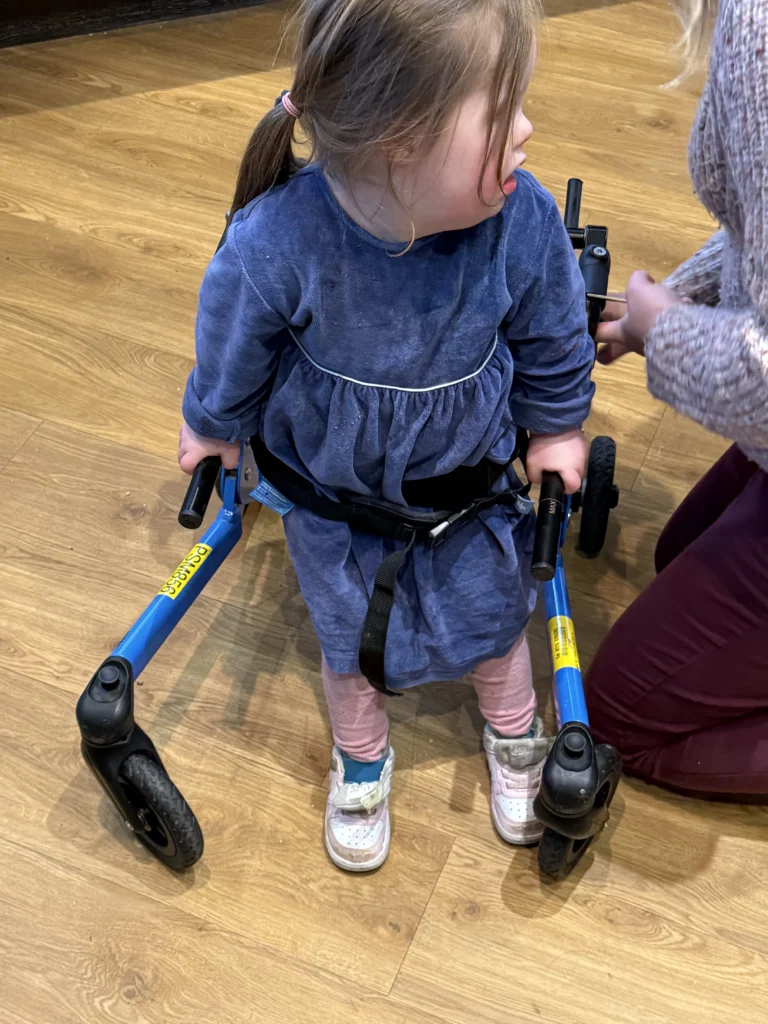
Gross motor development (sitting, crawling, standing, and walking) usually follows the same order as it does for other children. You’ll still see progress in stages, but building core strength, balance, and coordination often takes more time and patience.
Physical therapy often plays an important supportive role during this stage.
If it’s recommended for your child, it’s there to support strength, posture, and movement. Many families find that early intervention programmes provide helpful structure and reassurance during this period.
Fine motor development also takes time.
Skills like holding toys, turning pages, eating independently, or learning to dress require hand strength and coordination that often develop at a slower pace.
Occupational therapy can support these everyday skills by focusing on grip control, coordination, and practical independence.
You may not see dramatic leaps from month to month. Over time, however, small improvements add up. And when you look back, the progress is often clearer than it felt in the moment.
Speech and Language Development in Children With Down Syndrome
Your child might follow instructions, respond to their name, or clearly understand familiar routines, even if they can’t speak yet.
Expressive language often develops more gradually than receptive language.
There are several reasons for this. Low muscle tone can affect the muscles used for speech, making clear pronunciation more challenging. Hearing loss is also more common in children with Down syndrome and can influence how speech sounds are heard and repeated. In addition, language processing itself may take a little longer.
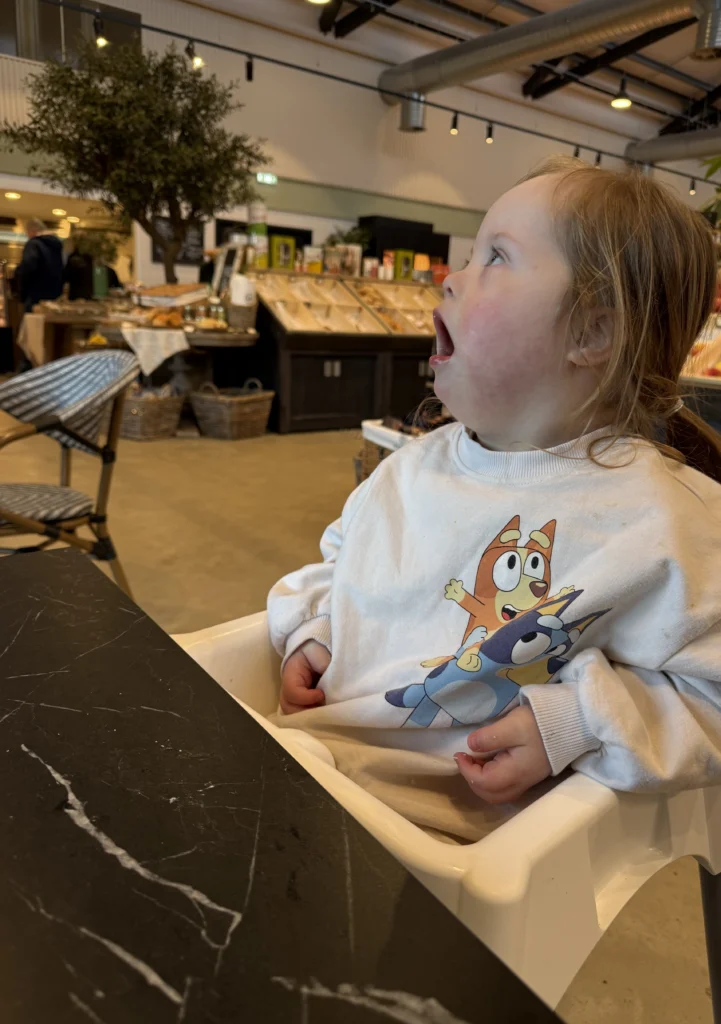
That doesn’t mean communication isn’t developing.
For many children with Down syndrome, communication shows up first through gestures, facial expressions, pointing, or signs.
Some families use sign language alongside spoken words to support language development and reduce frustration while speech continues to emerge.
Early intervention services, such as speech and language therapy, focus on strengthening oral motor skills, building vocabulary, and encouraging clear, consistent communication.
As your child develops, you may notice new sounds before full words or hear approximations before clarity.
Like with physical development, the developmental sequence remains familiar.
With support, repetition, and everyday conversation at home, language skills continue to build over time.
Cognitive Development and Learning in Children With Down Syndrome
Cognitive development is another area influenced by Down syndrome and an important part of your child’s growth.
Most children with Down syndrome have a mild to moderate intellectual disability. In practical terms, this means that learning new skills may take longer, and concepts often need to be repeated more frequently before they stick.
You might notice that your child needs extra time to process instructions, remember new routines, or move from one activity to another.
Attention span can vary, and problem-solving skills may develop at a slower pace.
That doesn’t mean learning isn’t happening. It simply means your child may benefit from more structure and consistency.
Visual learning strategies are often especially helpful for children with Down syndrome. Clear routines, picture schedules, step-by-step guidance, and hands-on teaching can make a significant difference.
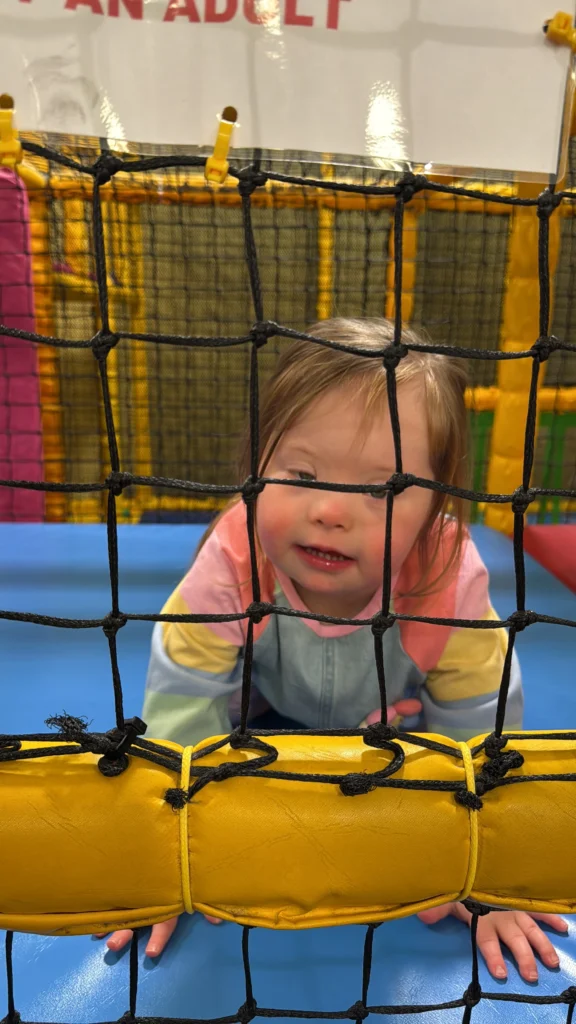
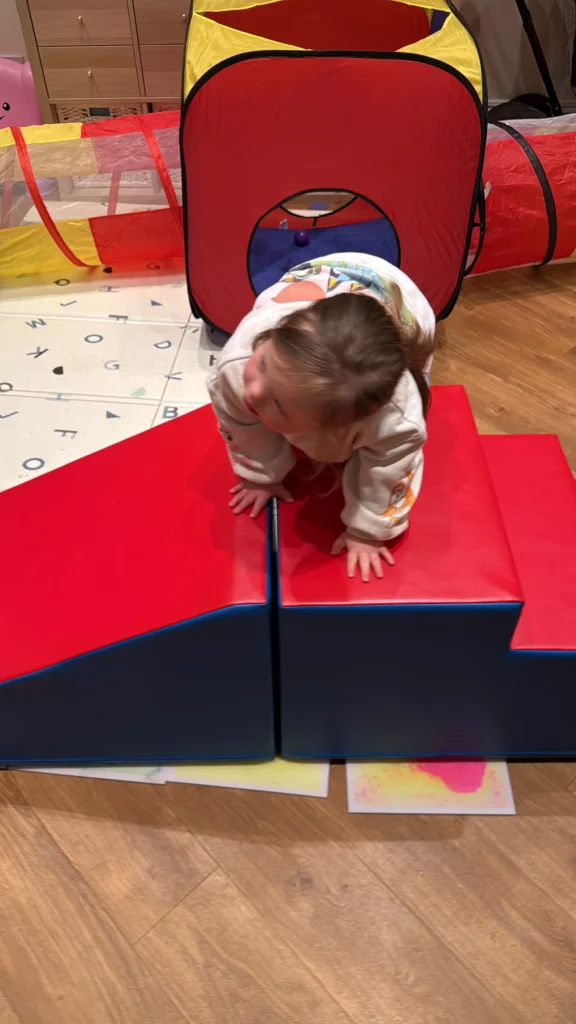
It’s also important to remember that independence might not come immediately, but breaking tasks into smaller steps helps build confidence over time.
Learning milestones such as recognising letters, counting, following multi-step instructions, or engaging in pretend play may appear later than in other children. But they do appear.
As your child grows, special education programmes and individual education plans can help tailor learning to their specific strengths and needs.
One of the most important things to understand about cognitive development in children with Down syndrome is that skills build on each other. Repetition strengthens understanding, and familiar routines create security, which makes learning easier.
Down syndrome development in this area is not about whether your child can learn. It’s about how they learn best.
Health Conditions That Can Affect Development in Children With Down Syndrome
When you’re learning about Down syndrome development, it’s important to understand that development isn’t influenced by genetics alone.
Certain health conditions, which are more common in children with Down syndrome, can also affect how skills develop in the early years.
Not every child will experience these conditions. But knowing what to monitor can make a big difference.
Most of these conditions are well understood and routinely monitored by healthcare providers.
Heart Defects In Children With Down Syndrome
Congenital heart defects are one of the more common medical concerns. Babies with Down syndrome are at a higher risk of being born with heart conditions that may require monitoring or surgery.
If your baby has a heart defect, reduced stamina, or recovery time can temporarily influence physical development and motor milestones.
Hearing Loss In Children With Down Syndrome
Hearing loss is also more common in children with Down syndrome. Recurrent ear infections or fluid build-up can affect how clearly a child hears speech sounds, which may influence speech and language development. Regular hearing checks are an important part of routine health monitoring.
Vision Problems In Children With Down Syndrome
Vision problems are also more common among children with Down syndrome. This includes issues such as reduced visual acuity or eye muscle differences, which can affect how your child explores their environment, recognises objects, or engages with learning materials. Early screening tests help ensure that vision concerns are identified and managed.
Thyroid Problems In Children With Down Syndrome
Thyroid problems are another condition that healthcare providers monitor closely. An underactive thyroid can impact energy levels, growth, and cognitive development if left untreated. Routine blood tests allow doctors to detect and treat thyroid issues early.
Obstructive Sleep Apnoea In Children With Down Syndrome
Sleep-related breathing conditions, including obstructive sleep Apnoea, are more common in children with Down syndrome due to differences in muscle tone and airway structure.
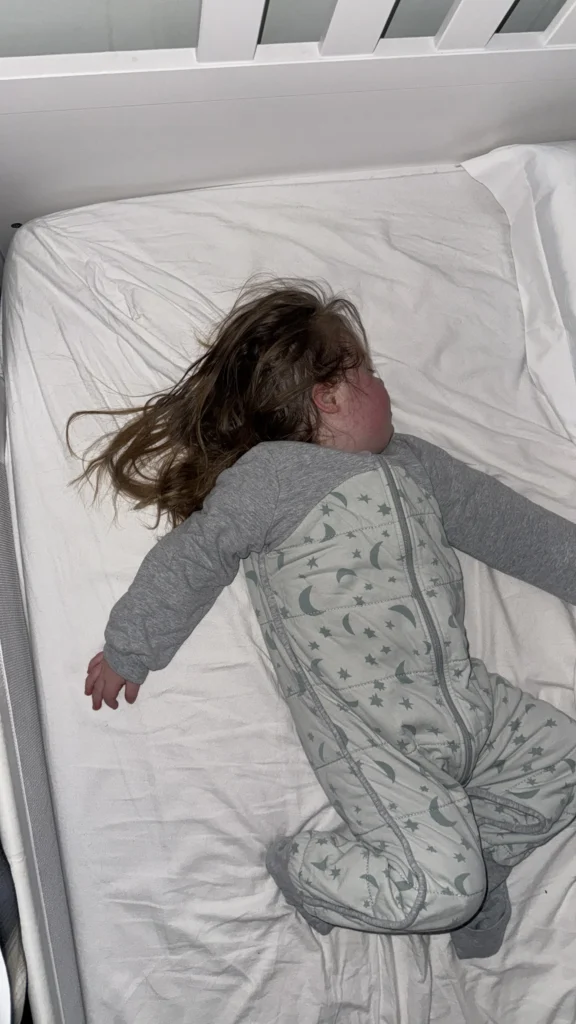
Poor sleep can affect attention, behaviour, and overall development, making early identification and management important.
Digestive Problems In Children With Down Syndrome
Children with Down syndrome are at greater risk of developing digestive conditions, including coeliac disease. If your child is not absorbing nutrients properly, growth and energy levels may be affected. Monitoring growth patterns and addressing digestive concerns supports overall development.
Atlantoaxial Instability In Children With Down Syndrome
Another condition sometimes monitored is atlantoaxial instability, which involves increased movement between the upper bones of the spine. While many children remain symptom-free, doctors may recommend screening to ensure safe participation in physical activities.
Regular health supervision, screening tests, and open communication with healthcare providers are important parts of supporting development in children with Down syndrome.
Early identification of health concerns helps minimise their impact on physical development, language skills, and learning.
While the list of possible conditions can feel daunting at first, many children do not experience all of these issues. Modern medical care and consistent monitoring have significantly improved long-term outcomes and life expectancy for people with Down syndrome.
Understanding the medical side of Down syndrome development isn’t about expecting problems. It’s about being informed so you can respond confidently if they arise.
The Role of Early Intervention Programmes for Children With Down Syndrome
If there’s one thing that consistently supports Down syndrome development in the early years, it’s early intervention.
Early intervention programmes are designed to support children with developmental delays from birth through age three. The goal of early intervention isn’t to change who your child is. It’s to build on their strengths and support areas that need more time.
For children with Down syndrome, early intervention usually includes physical therapy, occupational therapy, and speech and language therapy.
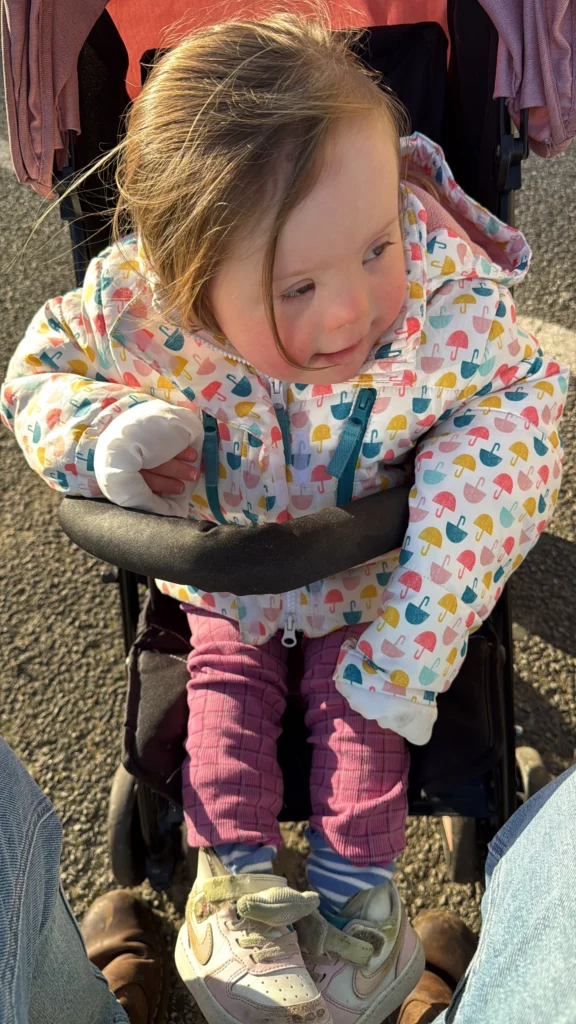
Early intervention supports developmental progress by providing structure and consistency during a period when the brain is rapidly developing. It also gives you guidance, reassurance, and practical tools to support learning at home.
You are still your child’s most important teacher. Early intervention simply adds a team around you.
And over time, that steady, supported approach makes a meaningful difference in how skills develop.
5 Questions You Might Still Have About Your Child and Down Syndrome
1. Are there known risk factors for Down syndrome?
The likelihood of a baby being born with Down syndrome increases with maternal age, particularly for mothers over 35. However, most children with Down syndrome are born to younger women simply because more babies overall are born in that age group.
A genetic counsellor can help explain individual risk factors and recurrence likelihood if you’re planning future pregnancies.
2. Can Down syndrome be diagnosed before birth?
Screening tests during pregnancy can estimate the probability of a baby being born with Down syndrome, often using maternal blood tests combined with ultrasound markers.
Diagnostic tests such as amniocentesis or chorionic villus sampling can confirm a prenatal diagnosis.
3. Are there any Down syndrome-related health conditions to be aware of long-term?
Some children with Down syndrome may experience health conditions such as congenital heart defects, thyroid disorders, hearing loss, or digestive conditions like coeliac disease.
Regular health supervision and screening help doctors monitor and manage these concerns. Healthcare providers also monitor sleep apnea, immune differences, dental health, and spinal stability.
While the risk of Alzheimer’s disease is higher later in adulthood, early childhood primarily focuses on growth, development, and stability.
4. Do children with Down syndrome reach developmental milestones?
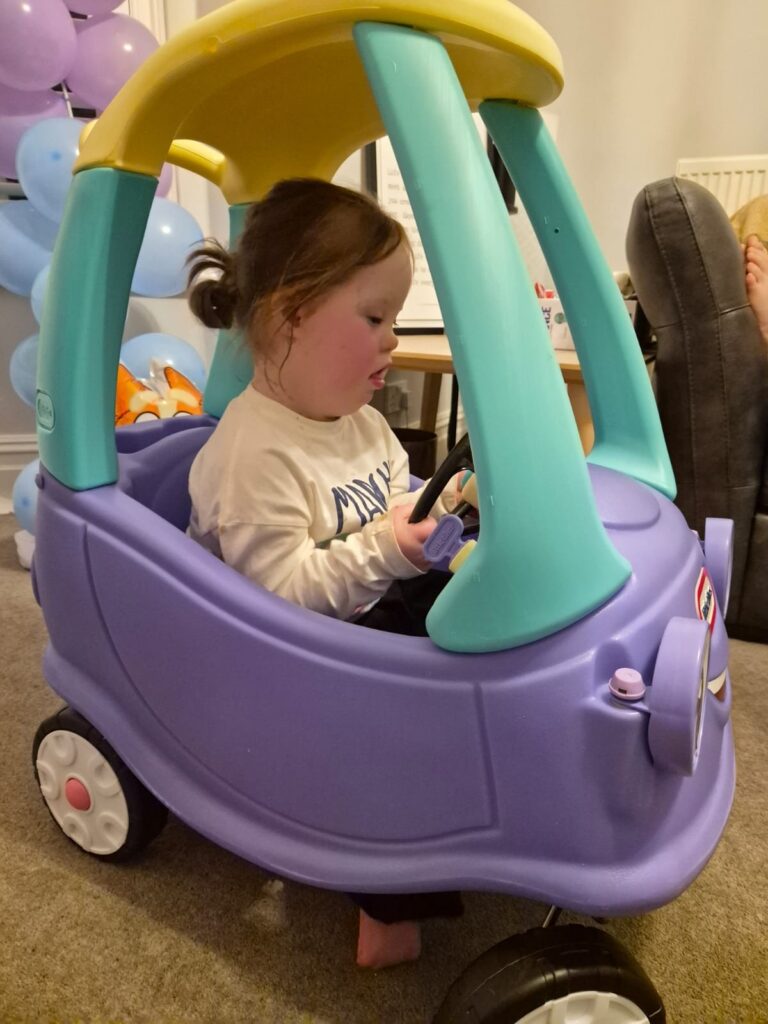
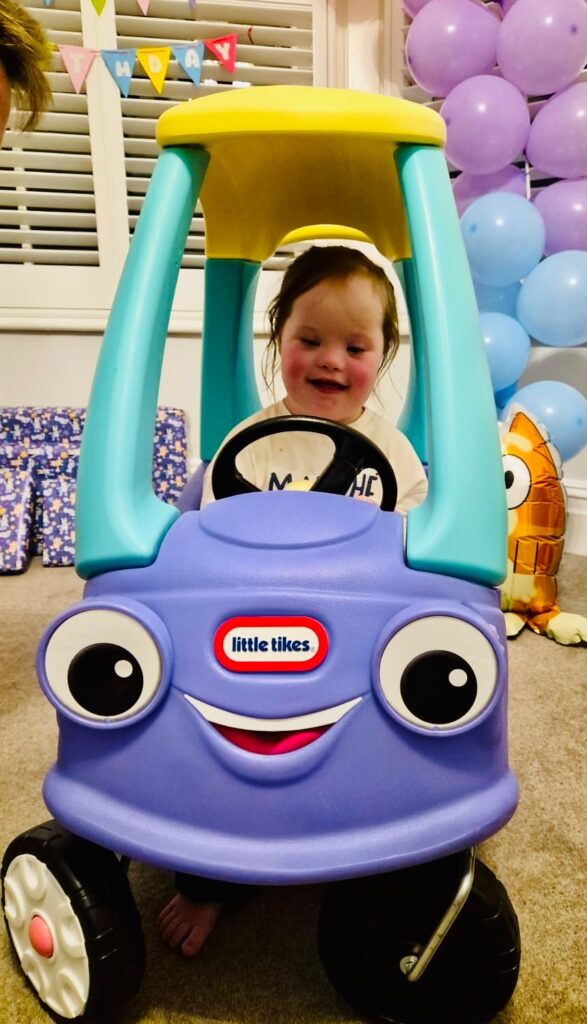
Most children with Down syndrome do reach developmental milestones. They may take longer to develop head control, build muscle strength, or develop language skills, but progress continues over time.
With physical therapy, occupational therapy, and speech therapy, many children steadily build motor, communication, and cognitive skills.
5. What does the long-term outlook for children with Down syndrome look like?
Advances in healthcare have significantly improved life expectancy and quality of life for people with Down syndrome.
Today, many individuals with Down syndrome lead happy, meaningful lives. Developmental differences do not define the whole of a person’s life. With support, structure, and community, many grow into adults with independence, relationships, and personal strengths.
What I’ve Learned Watching Maisy Grow
When I first started trying to understand Down syndrome development, I wanted answers, timelines, and certainty.
What I’ve learned, watching Maisy grow, is that development is far less about deadlines and far more about direction.
Yes, there have been developmental delays. Yes, there have been appointments, therapies, and periods of uncertainty. But there has also been steady progress.
Her muscles gained strength, her words became clearer, and her confidence grew.
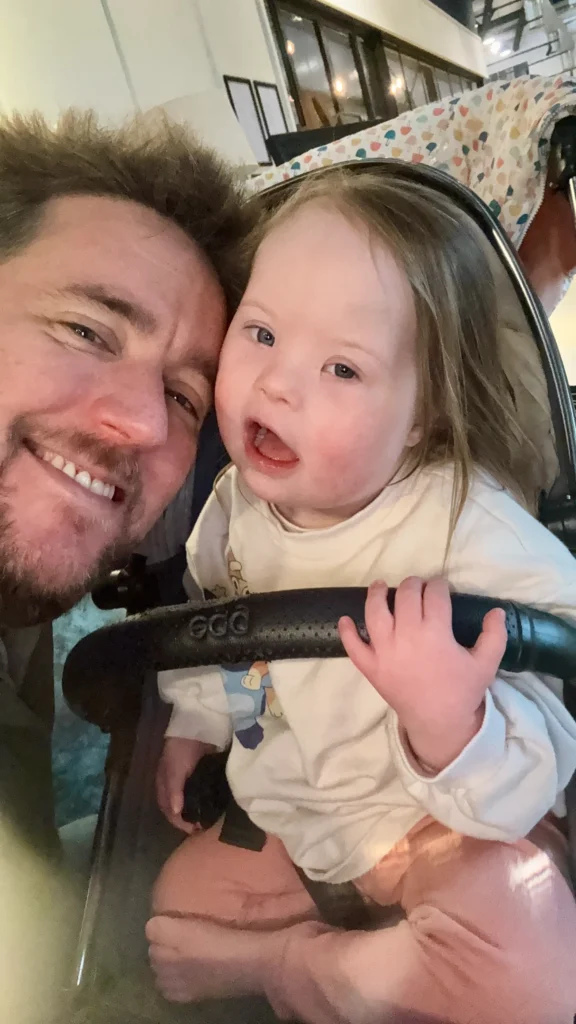
Maisy has followed the same developmental sequence as any other child. She just moves through it at her own pace.
And somewhere along the way, I stopped asking if she is behind and started looking at how far she’s come.
If you’re at the beginning of this journey, know that you don’t need to predict every step. Understanding the path, supporting your child with the right tools, and trusting that growth is happening, changes everything.